That’s a Wrap! Congratulations, You’ve Completed Secondary 1 History
That’s a Wrap! Congratulations, You’ve Completed Secondary 1 History
That's a wrap! Mei and Kai flip through their Secondary 1 scrapbook, one chapter at a time: early Singapore's trade connections, how it became a British trading post, how it grew into a great port city, the migrants who built it, and its fall to the Japanese in 1942. Each stage led to the next: Britain needed a new port, free trade and world events made it boom, the boom drew migrants, and Britain's war elsewhere left it unable to defend what it had built.
Chapter 1: How Connected Was Early Singapore?
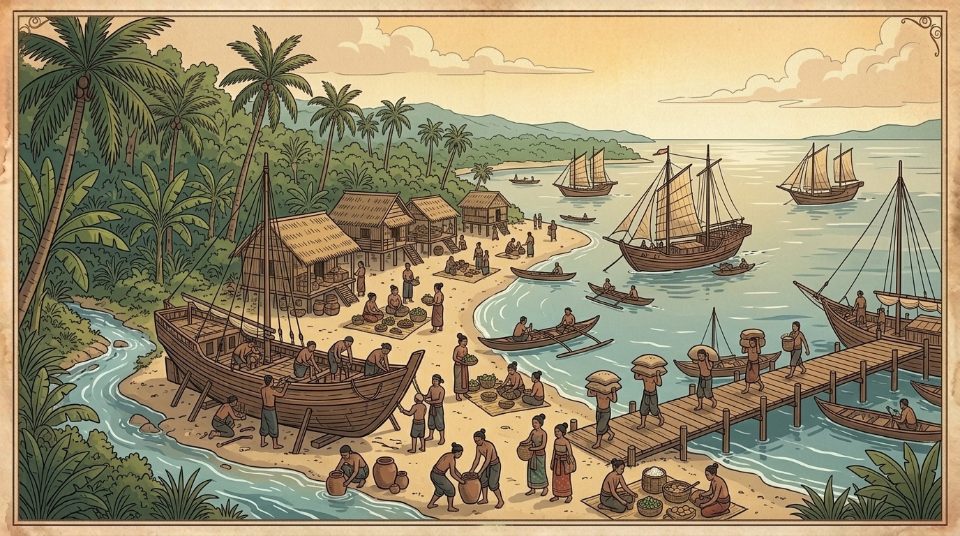
- Sea trade: by the 7th century, stronger ships carried trade by sea, and Srivijaya, based at Palembang, grew rich as its navy kept pirates away from passing ships.
- Temasek: in the 14th century it was a busy port trading with China; the Chinese traveller Wang Dayuan wrote about it in 1349.
- Location: it sat at the southern end of the Straits of Melaka, and the monsoon winds brought ships to it.
- Decline and revival: Singapore declined as Melaka rose around 1400, revived under the Johor Sultanate from 1528, then went quiet again.
- Answer: early Singapore was well connected whenever the region's trade passed through it, but its fortunes rose and fell with the powers around it.
Chapter 2: How Did Singapore Become a British Trading Post?
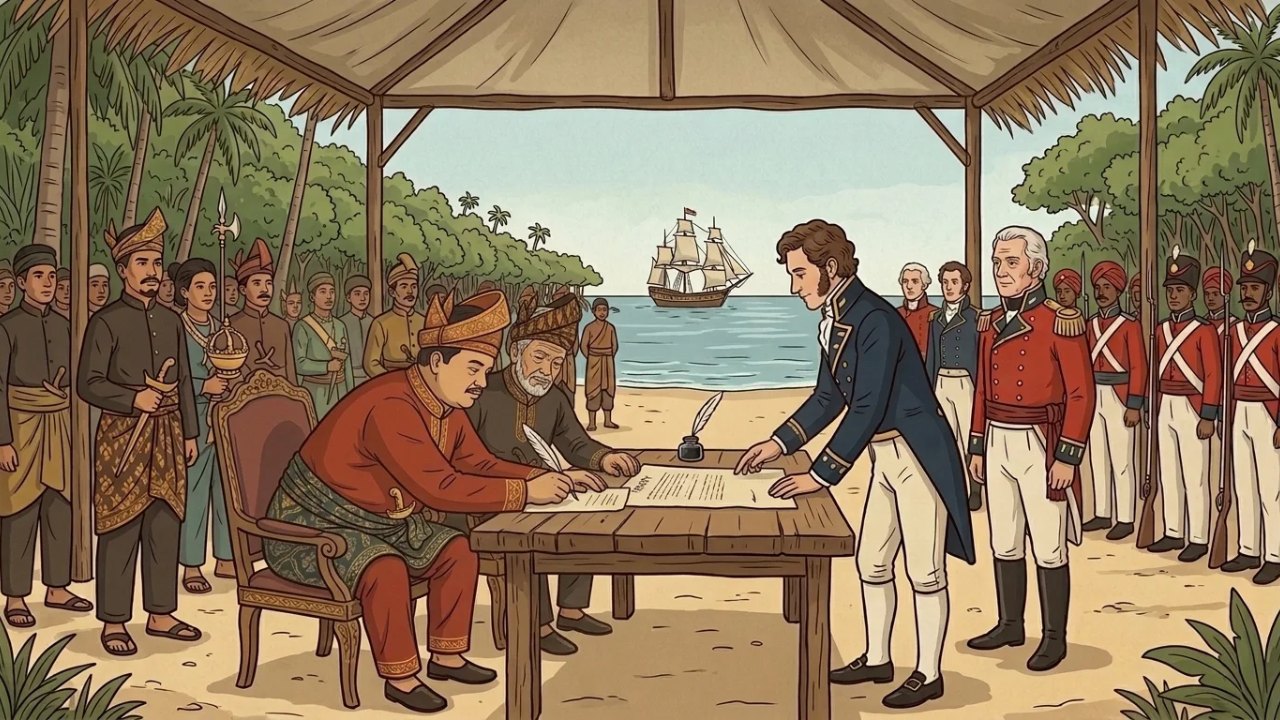
- The need: the British needed a port free from Dutch control, to protect their trade in the region.
- Hussein: Raffles backed Hussein, the elder son passed over for the throne in 1812, as Sultan, so a ruler would sign with Britain.
- The 1819 treaty: signed on 6 February 1819, it gave the British only a trading post in the south, not the whole island.
- Farquhar: the first Resident ran the new settlement from 1819 until Raffles dismissed him in 1823.
- The 1824 treaties: the Dutch were furious, but the Anglo-Dutch Treaty (March) and the Treaty of Friendship and Alliance (August) gave Britain the whole island.
Chapter 3: How Did Singapore Grow Into a Great Port City?
- Free port: no taxes on trade and no fees for ships to enter, which drew traders in.
- British rule: law and order, schools, hospitals and a bigger harbour for more ships.
- Suez Canal: opened in 1869, it cut the trip from London from 120 days to about 50 and made Singapore a key coaling station.
- Tin and rubber: Malaya's tin and rubber were exported through Singapore, much of it to the United States.
- Setback: in the Great Depression rubber fell from 34 cents (1929) to 4.95 cents (1932), but by 1942 trade was at an all-time high.
Chapter 4: What Role Did the People Play?
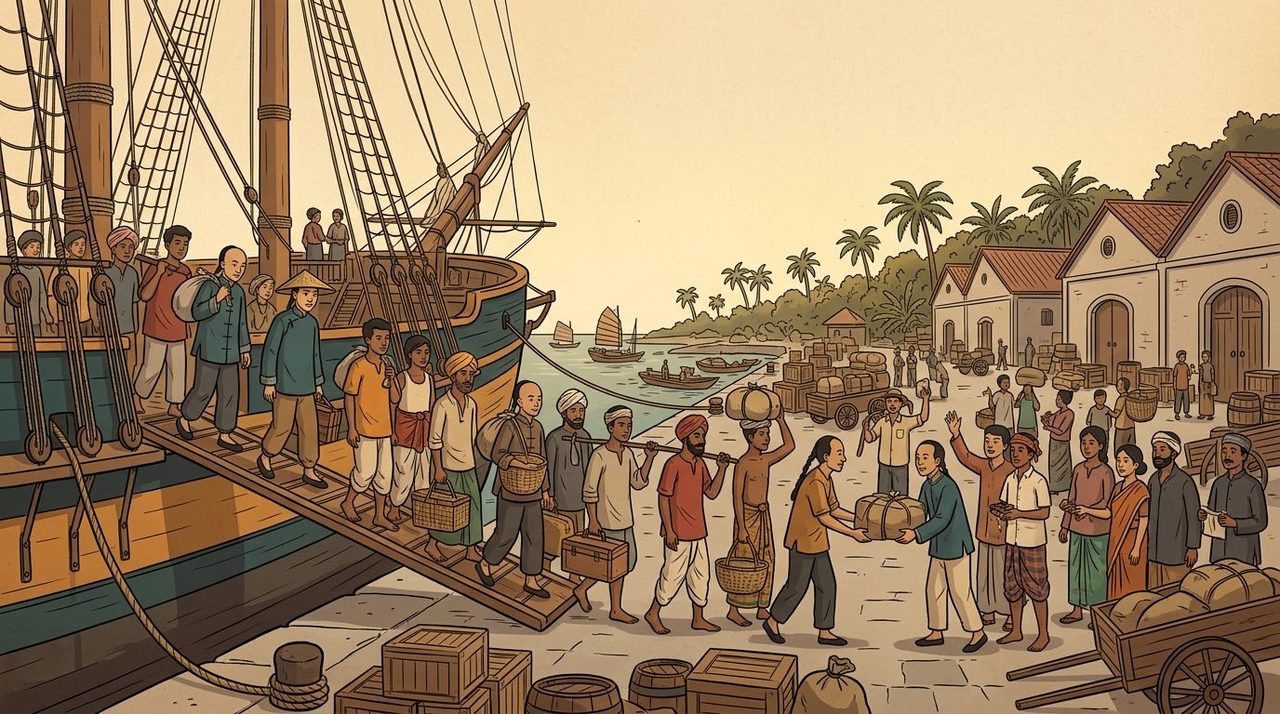
- Growth: about 150 people lived here in 1819, about 11,000 by 1824 and 227,000 by 1901. Most were migrants.
- Origins: they came from China, India and Ceylon, the Malay Archipelago, Europe and Arabia.
- Traders and workers: Hajjah Fatimah kept her late husband's business going, and a mosque bears her name; labourers built the roads.
- Givers: Tan Tock Seng opened a paupers' hospital on Pearl's Hill in 1844, on land from Syed Omar Aljunied.
- Law-makers: Dr Lim Boon Keng, and Eunos Abdullah, the first Malay Legislative Council member (1924), who asked for Kampong Melayu.
Chapter 5: Did Singapore Have to Fall?
- The fleet: the naval base depended on a fleet from Britain, and by 1939 the journey would take 180 days.
- War in Europe: Britain fought Germany from 1939, so it kept its fleet at home.
- The invasion: the Japanese landed at Kota Bahru in December 1941, at the same time as the attack on Pearl Harbor.
- The surrender: seventy days later, on 15 February 1942, the British surrendered at the Ford Motor Factory.
- Answer: not completely certain, but very hard to prevent, because Britain was stretched worldwide and Japan was well prepared.
That’s a Wrap! Congratulations, You’ve Completed Secondary 1 History
Linking the Chapters: How Did Singapore Change?
- PPointOver Secondary 1, Singapore changed from a trading port that rose and fell with its neighbours into a busy British port city built by migrants, until it fell to Japan in 1942.
- EEvidenceTemasek traded with China in the 14th century but went quiet after Melaka rose. The 1819 treaty made it a British trading post, and the 1824 treaties gave Britain the whole island. Free port status and the Suez Canal (1869) made trade boom, and the population grew from about 150 (1819) to 227,000 (1901). On 15 February 1942 the British surrendered to Japan.
- EElaborationEach stage led to the next. Its location on the Straits of Melaka was why Britain wanted it; free trade and world events made the port grow; that growth drew the migrants who built the city. But the city relied on Britain for its defence, so when Britain's war in Europe kept the fleet away, Singapore could not hold out.
- LLinkHence, Singapore's story across Secondary 1 was shaped by its location and its trade, which first made it rich under British rule and then made it a prize that Japan took in 1942.
In One Sentence
- Over hundreds of years, Singapore's location and trade turned it from a connected trading port into a British port city built by migrants, until Britain's war elsewhere left it to fall to the Japanese in 1942.
Think About It
- What stayed the same about Singapore from Temasek to 1942, and what changed?
- Which chapter's story surprised you most this year, and why?
- If you could ask one person from Secondary 1 History a question, who would it be, and what would you ask?