How Did Singapore Become a Nation?
How Did Singapore Become a Nation?
Lower-secondary History, done! Mei and Kai return to the Padang, where the year began, to answer the big question: how did Singapore become a nation? These notes explain it in four stages: the war and the British return turned people towards self-government by 1959; merger in 1963 led, unplanned, to independence in 1965; the new nation secured itself through the United Nations, ASEAN and National Service; and new homes, jobs, schools and health care gave people a stake in it. At every stage, circumstances and people's choices worked together.
Last Year, in Four Pages
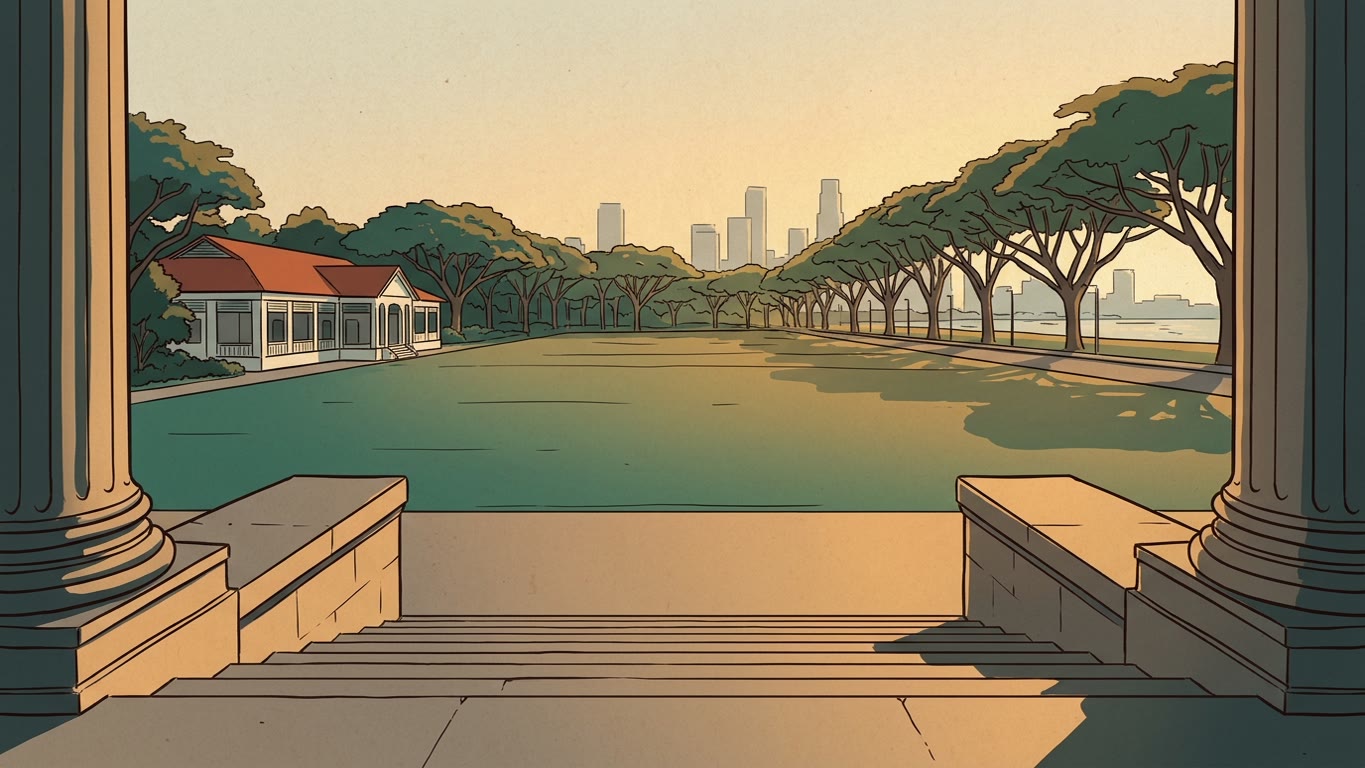
- Around 1299: Temasek, a port linked by trade to China, India and the region.
- 1819: after centuries of ups and downs, the British set up a trading post.
- Migrants: they arrived from all over, and helped turn it into a thriving port city.
- February 1942: Singapore fell to the Japanese, where the Secondary 2 story begins.
How Did Singapore Become a Nation?
Stage 1: Towards Self-Government (1942–1959)
- PPointThe first stage in Singapore becoming a nation was that the war and its aftermath led many people to want a say in how they were ruled.
- EEvidenceSingapore fell to the Japanese in February 1942. During the Occupation, people faced fear and hunger, and rice, salt and sugar were rationed. The British came back in 1945. By 1959, Singapore had full internal self-government, and its new state anthem was sung for the first time on the City Hall steps.
- EElaborationNobody here had chosen the Occupation, but living through it changed how people saw British rule, so after the war many decided they wanted to run their own country, and that pressure moved Singapore from colony to self-government.
- LLinkHence, self-government in 1959 was the first step from colony towards nation, though Singapore was not yet independent.
Stage 2: Merger and Separation (1963–1965)
- PPointThe second stage was that merger with Malaysia, meant as a road to independence from Britain, ended in separation and full independence.
- EEvidenceSingapore joined Malaysia in 1963. Mistrust grew between Singapore and the federal government over political views on race, economic quarrels and the 1965 "Malaysian Malaysia" campaign. On 9 August 1965, Singapore separated and became independent.
- EElaborationMerger was chosen because Britain would only let Singapore go as part of a bigger federation, but the differences inside Malaysia grew until the two sides could not work together, so independence arrived through a result nobody had planned.
- LLinkThus, separation made Singapore an independent nation, but one that now had to survive on its own.
Stage 3: Keeping the New Nation Safe (from 1965)
- PPointThe third stage was that Singapore's leaders chose to secure the new nation through friends abroad and a defence force of its own.
- EEvidenceAt independence, Singapore had only two battalions, and British forces would not stay forever. Singapore joined the United Nations, helped set up ASEAN, and began National Service in 1967.
- EElaborationA tiny new country could not rely on others to protect it, so making friends in the world and region reduced the threats it faced, while National Service built its own defence and asked ordinary young men to serve the nation.
- LLinkTherefore, these choices let Singapore survive as an independent nation and gave its citizens a shared duty to defend it.
Stage 4: Building Better Lives (to the Late 1970s)
- PPointThe fourth stage was that improving people's daily lives gave them a stake in the new nation.
- EEvidenceUp to the late 1970s, Singapore built new flats, factories and jobs, and improved schools and health. The HDB, set up in 1960, built about 54,000 flats in its first five years and began selling them in 1964. The Pledge is said in schools every day.
- EElaborationSteady jobs and homes of their own tied families' futures to Singapore's success, and shared schools and symbols like the Pledge helped people see themselves as Singaporean, though change did not reach everyone at the same speed.
- LLinkHence, better lives turned an independent state into a nation that its people felt they belonged to.
The Big Idea: Circumstances and Individuals
- Circumstances: what is happening around you. Individuals: the choices people make. The answer is both, pushing on each other.
- 1819: Britain needed a port free from Dutch control (circumstance); Raffles chose this island and backed Hussein as Sultan (choice).
- The war: nobody here chose the Occupation (circumstance); afterwards, many people decided they wanted to run their own country (choice).
- 1965: a tiny new country with only two battalions, and British forces that would not stay forever (circumstance); its leaders chose to build up its own defence, with National Service (choice).
- Not only famous leaders: migrants who built the port, families who got through the Occupation, young men taking their oath.
Four Lenses, One Last Look
- Diversity: the Occupation felt very different, depending on who you were.
- Historical significance: 1959 changed things, and people still remember it; National Service too.
- Causation: merger set off results nobody planned, including separation.
- Change and continuity: by the late 1970s a lot had changed, but not for everyone, and not at the same speed.
Still Here Today
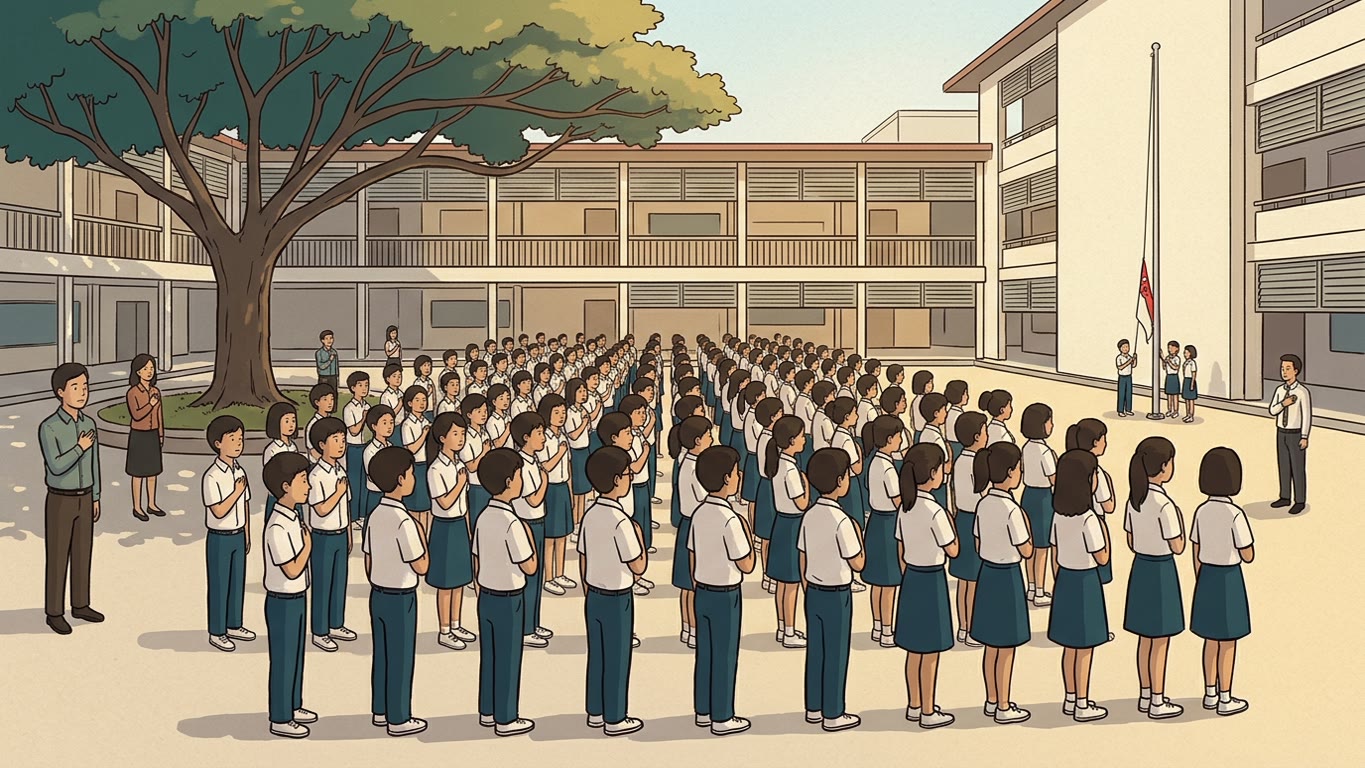
- Visible history: the HDB blocks around you, the Pledge you say at school, the field at the Padang.
- Each came from people making choices, in times they did not choose.
- One day, people will look back at the choices we make, too.
Congratulations, You Did It!
- Two school years, ten chapters, and nearly seven hundred years of history, from 1299 to the late 1970s.
- From message to purpose: you have gone from "What does this source say?" to "Why was it made?"
- Exam skills: you can describe, explain, and weigh up both sides before making a judgement.
- Ready for one last challenge? Try the Secondary 2 Final Challenge, and revise any time with the Sec 2 Bonus Section.
In One Sentence
- Singapore became a nation in stages, from self-government in 1959 through merger and an unplanned independence in 1965 to securing itself and improving people's lives by the late 1970s, as circumstances it did not choose and the choices of leaders and ordinary people worked together.
Think About It
- Pick one turning point from Secondary 1 or 2. Was it shaped more by circumstances or by people's choices? Explain your view.
- Which of the four lenses (diversity, significance, causation, change and continuity) helps you most to understand Singapore's story, and why?
- What is one place or habit in your daily life that comes from this history? How did it start?