Optional: How Do I Do a Historical Investigation?
Optional: How Do I Do a Historical Investigation?
A Historical Investigation is a group project done at school, usually once a year: the group picks a question about the past, finds sources, works out an answer and presents it. It has four phases (sparking curiosity, gathering data, exercising reasoning and reflective thinking), each using skills you already have. Every school runs it differently, so always check the task, format and marks with your teacher.
Open the Historical Investigation plannerYour group's question, sources, evidence table and answer, filled in together and saved as you type.What It Is
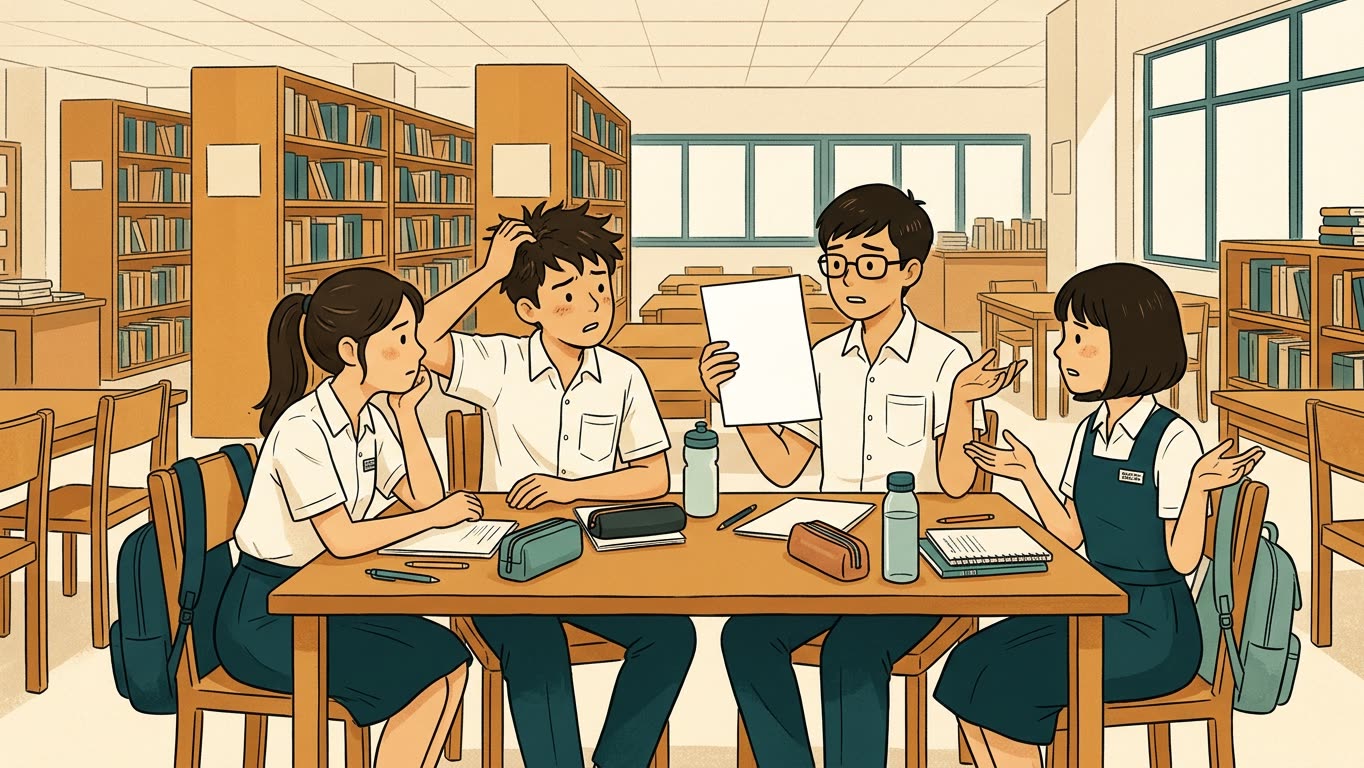
- A group project: done at school, usually once a year.
- The task: pick a question about the past, find sources, work out an answer, and present it.
- Your school: sets the task, the format and the marks.
- Our example: a made-up group, Nurul, Jun Hao, Priya and Daniel.
Phase 1: Sparking Curiosity
- Inquiry question: choose a good one, because it shapes the whole investigation.
- First idea: "Were the 1970s good?" Too big, and it can be answered yes or no.
- Final question: "How did national campaigns change daily life in the 1970s?"
- A good question: is focused, cannot be answered in one word, and has sources you can find.
Phase 2: Gathering Data
- Provenance: find sources, and record where each one came from.
- Posters from public-health campaigns: ask why each was made, using the purpose steps.
- An interview with a grandmother about the Keep Singapore Clean campaign, which began in 1968: claim, support, question.
- A toothbrushing campaign run in schools in 1973.
Phase 3: Exercising Reasoning
- Evidence table: what each source says, and how far you can trust it.
- Compare sources: does the grandmother's memory match what the posters asked people to do?
- Sort causes and results: which changes came from the campaigns, and which from other things, such as moving into new flats?
Phase 4: Reflective Thinking
- Step back: what is our answer? What is still unclear? Whose voice is missing?
- Be honest about gaps: the group had only one interview, so they said so, which makes the conclusion more trustworthy.
- Share your findings: schools use presentations, storybooks, plays, diaries and letters.
In One Sentence
- A Historical Investigation moves through four phases: ask a focused question, gather and record sources, test and connect the evidence, then reflect honestly on your answer and its gaps.
Think About It
- Turn "Was life hard in the 1960s?" into a good inquiry question. What makes yours better?
- Your group has five posters but only one interview. Whose voices might be missing, and how could you find them?
- Why is it a strength, not a weakness, to say what your investigation couldn't find out?