How Do You Compare Two Sources?
How Do You Compare Two Sources?
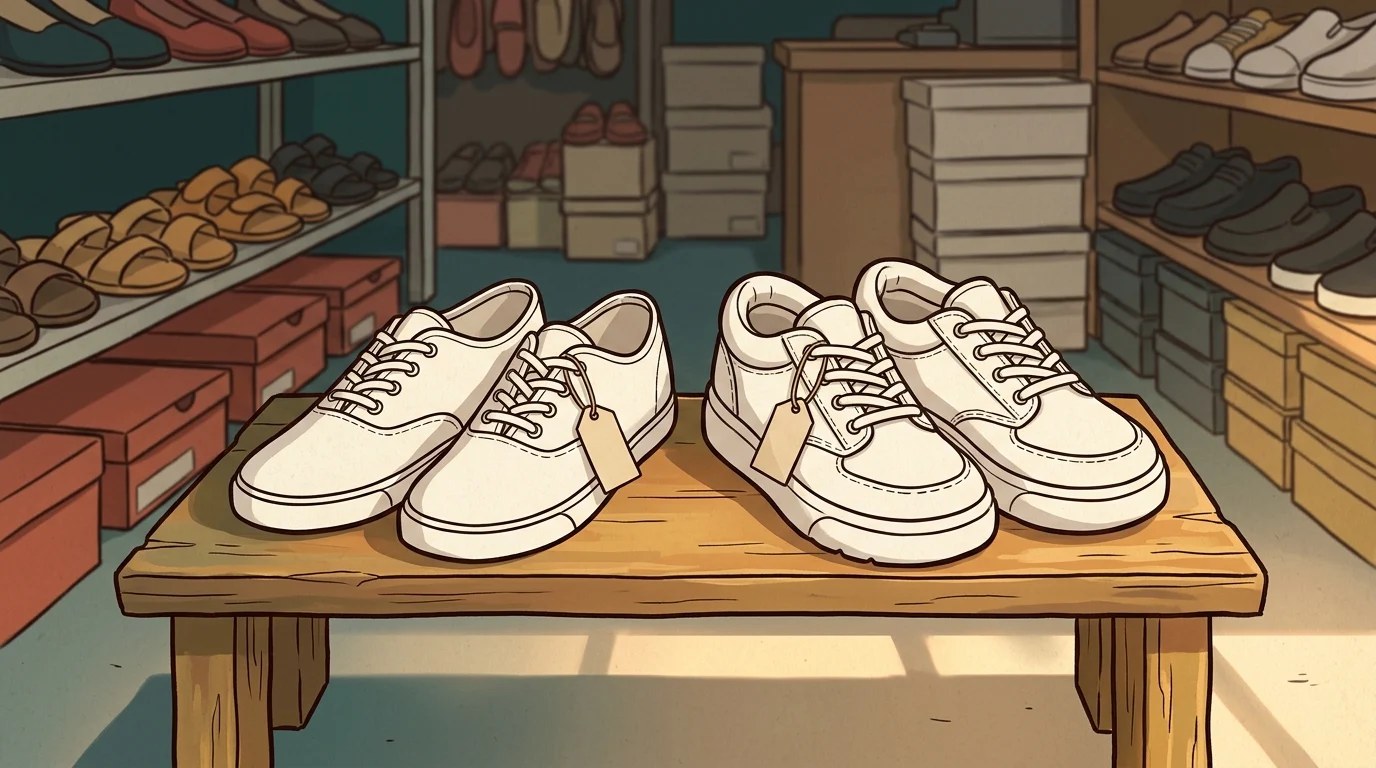
Comparing sources is like comparing shoes: you compare them on the same things. First, spot the of question: Type 1 asks for only similarities or only differences, while Type 2 ("How similar…?") needs both. Then follow four steps: understand the question, find the , infer from each source, and match the inferences. Always , and aim for and , because that is where the marks are.
Type 1 or Type 2?
- Type 1: "similar" or "different" comes near the end, by the question mark. "In what ways are these two sources similar?" Only similarities (or only differences).
- Type 2: "similar" or "different" comes right after "How". "How similar are these two sources?"
- Why Type 2 needs both: the answer could be "not very", so you need similarities and differences.
The Four Steps
- Understand the question: Type 1 or Type 2?
- Identify the criterion: what topic do both sources talk about?
- Make an inference from each source.
- Match the inferences: do they agree, or not?
Worked Example: Two Migrants
- Source A: Low Cheng Gin came to Singapore aged ten. He felt "like a fish out of water" and "could not understand" people.
- Source B: Palanivelu Natesan came in 1930. He saw "NO VACANCY" signs everywhere and felt "really let down".
- Criterion: what life was like when they first arrived.
- Similar: both found their first days hard.
- Different: for Low Cheng Gin the problem was language and strangeness; for Natesan, finding a job.
Compare Like With Like
- The rule: your comparison must be about the same thing.
- Wrong: "Source A says the people sounded different, but Source B talks about his uncle's advice." Two different topics.
- Right: "Sources A and B are similar in showing that new migrants had a hard start."
What You Can Compare
- Type: written, pictorial, statistics, oral.
- Origin: who made it, when, and where it was published.
- Content: what it tells you about the issue.
- Tone: the writer's attitude, such as positive, negative or critical.
- Marks: type and are easy but score low. Content and tone get the marks.
One More: The Coolies
- Source C: based on a report by William Pickering, Protector of the Chinese. Coolies were "tricked into leaving home"; in Telok Ayer, "many men were kept shut in".
- Source D: based on the words of a coolie, Lew Ship Yit. Promised "a very good job", then "taken upstairs above a shop and locked in".
- Similar: both show the coolies were promised good jobs, then shut away instead.
In One Sentence
- To compare sources, spot the question type, find a criterion both sources share, infer from each, and match the inferences on the same point.
Think About It
- "How different are Sources A and B?" Type 1 or Type 2? What does your answer need?
- Why do comparisons of type and origin score fewer marks than comparisons of content?
- Pick two news reports about the same event. What criterion could you use to compare them?