How Did the British Establish a Trading Post in Singapore?
How Did the British Establish a Trading Post in Singapore?
Raffles wanted a British port near the southern entrance to the Straits of Melaka. He overcame two challenges: opposition from his own superiors, which Lord Hastings' approval removed, and 's position as a Dutch , which he got round by exploiting the quarrel over Johor's throne. The resulting of 6 February 1819 gave Britain a trading post, but not the whole island, and angered the Dutch.
Part 1: The Search
- The aim: Raffles, Lieutenant-Governor of Bencoolen, wanted a port that could compete with the Dutch and serve as a halfway port between India and China.
- Opposition: the Dutch protested, and his own superiors refused because they did not want to anger the Dutch.
- Approval: in September 1818, Lord Hastings, of India, agreed, on condition that it did not bring the EIC into conflict with the Dutch; this allowed the search to go ahead.
- A false start: Farquhar preferred the Karimun Islands, but they turned out to be unsuitable.
- Arrival: on 28 January 1819, Raffles' ships anchored off St John's Island, and the told him the Dutch were not in Singapore, so he could proceed.
Part 2: The Problem
- The request: on 29 January 1819, Raffles and Farquhar met the local chief, Abdul Rahman, and asked to set up a trading post.
- No authority: the Temenggong could not agree, because Singapore was part of Johor-Riau and only the Sultan could.
- A Dutch vassal: Johor-Riau was bound to the Dutch by treaties of 1784 and 1818, so its Sultan would never agree; Raffles needed another way.
Part 3: The Solution
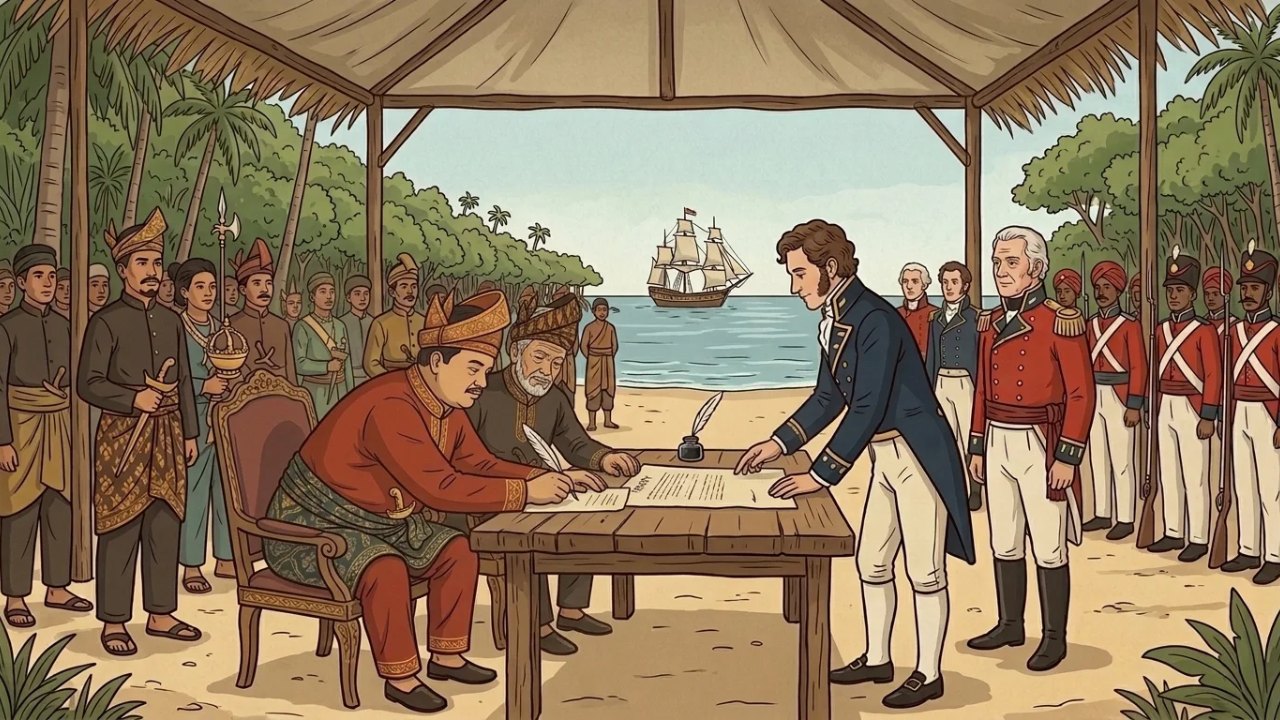
- 1812: when Sultan Mahmud Shah died, his elder son, Tengku Hussein, was away, and the chiefs, with Dutch support, made the younger son, Tengku Abdul Rahman, Sultan.
- Recognition: with the Temenggong's help, Raffles secretly brought Hussein to Singapore and recognised him as the rightful Sultan.
- 6 February 1819: Sultan Hussein and the Temenggong signed a treaty with Raffles.
- Next steps: Farquhar became the first , and Raffles left for Penang the next day.
How Did the British Establish a Trading Post in Singapore?
How Raffles Overcame the Problem
- PPointThe British overcame the obstacle of Johor-Riau's ties to the Dutch by exploiting the quarrel over Johor's throne.
- EEvidenceIn 1812 the throne went to the younger son, Tengku Abdul Rahman, with Bugis and Dutch backing, while the elder son, Tengku Hussein, was away. In 1819 Raffles, helped by the Temenggong, brought Hussein to Singapore, recognised him as Sultan, and on 6 February 1819 signed a treaty with him and the Temenggong.
- EElaborationRecognising Hussein gave Raffles a Sultan who could grant the trading post and who owed nothing to the Dutch, so the need for the Dutch-backed Sultan's consent was bypassed. The yearly payments and British protection in the treaty gave Hussein and the Temenggong good reason to agree.
- LLinkTherefore, Raffles turned a local quarrel into a legal basis for a British trading post, though this angered the Dutch and led directly to a dispute.
What the 1819 Treaty Said
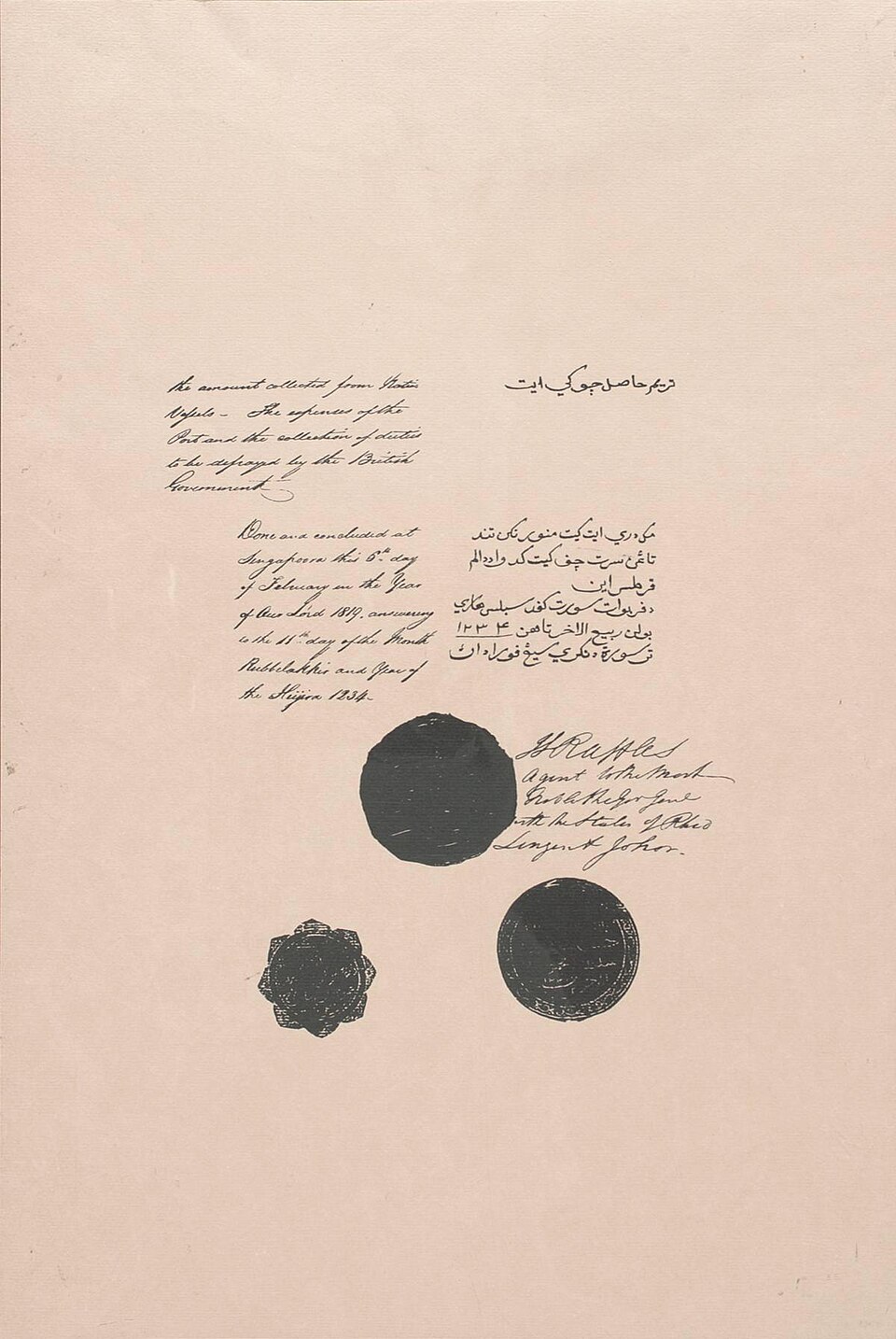
- Trading post: the British could set up a trading post in the southern part of the island.
- Payments: the Sultan and the Temenggong received yearly payments and British protection.
- No other powers: they agreed not to make treaties with any other Western power, shutting the Dutch out.
- Not the whole island: the treaty did not give Britain all of Singapore, and the Dutch still claimed it, so the settlement's future was not yet secure.
In One Sentence
- With Lord Hastings' approval, Raffles got round Johor-Riau's ties to the Dutch by recognising Hussein as Sultan, and the treaty of 6 February 1819 gave Britain a trading post in the south of Singapore, though not yet the whole island.
Think About It
- Why do you think Hussein agreed to sign the treaty with Raffles?
- Lord Hastings said the port must not cause conflict with the Dutch. Did Raffles keep to that condition? Explain.
- How might the Dutch have seen the 1819 treaty? Why?