Not "bad at History": helping a child who learns differently
Some children struggle not with what they're learning, but with how they're being asked to learn it. A few changes, backed by learning research, help them, and every other learner too.
In short
- Children differ in how they focus, take in information and remember it. That's normal variation, not a flaw.
- Small chunks, words with pictures, testing yourself and coming back to ideas over several days help every learner.
- If difficulties persist, talk to the school early. You don't need a label to ask for support.
Many parents know this moment. A child starts secondary school, new subjects arrive all at once, and each one comes with pages and pages of content. The child works hard, but the marks don't show it. Long blocks of text are hard to stay focused on, and what was read last night is gone by morning.
It is easy to read this as a lack of ability. Often it is something else: cognitive overload, when there is more new information than the mind can take in at once. Left alone, it can chip away at a child's confidence. After enough evenings of hard work with little to show for it, many children quietly decide they are "just not good at" a subject, and stop trying as hard. What usually helps is structure: knowing what matters, in what order, in pieces small enough to hold on to. A different way of focusing and learning is not a flaw. It is a different way of thinking.
Every class is full of different minds
Educators call this learner variability. Students differ in how long they can hold attention, how much they can keep in mind at once, how quickly they read and how they best take in new ideas. For many families it has a name, such as dyslexia or ADHD. For many others it doesn't. Either way, the child is not "just not good at" the subject. The format isn't working for them yet.
What helps, and why
The encouraging news is that the strategies that help children who learn differently are well supported by learning research, and they help everyone.
Smaller pieces
Our working memory can only hold a little at a time. One idea per session, in short blocks, beats one long chapter.
Words with pictures
A timeline, a map or a simple diagram next to the text gives the brain two ways in. Many children remember the picture first.
Test, don't just reread
Trying to recall something, through a quick quiz, flashcards or explaining it aloud, builds memory far better than reading it again.
Come back to it
Revisiting an idea after a day, then a few days, then a week makes it stick. A little spacing beats a lot of cramming.
Make the structure visible
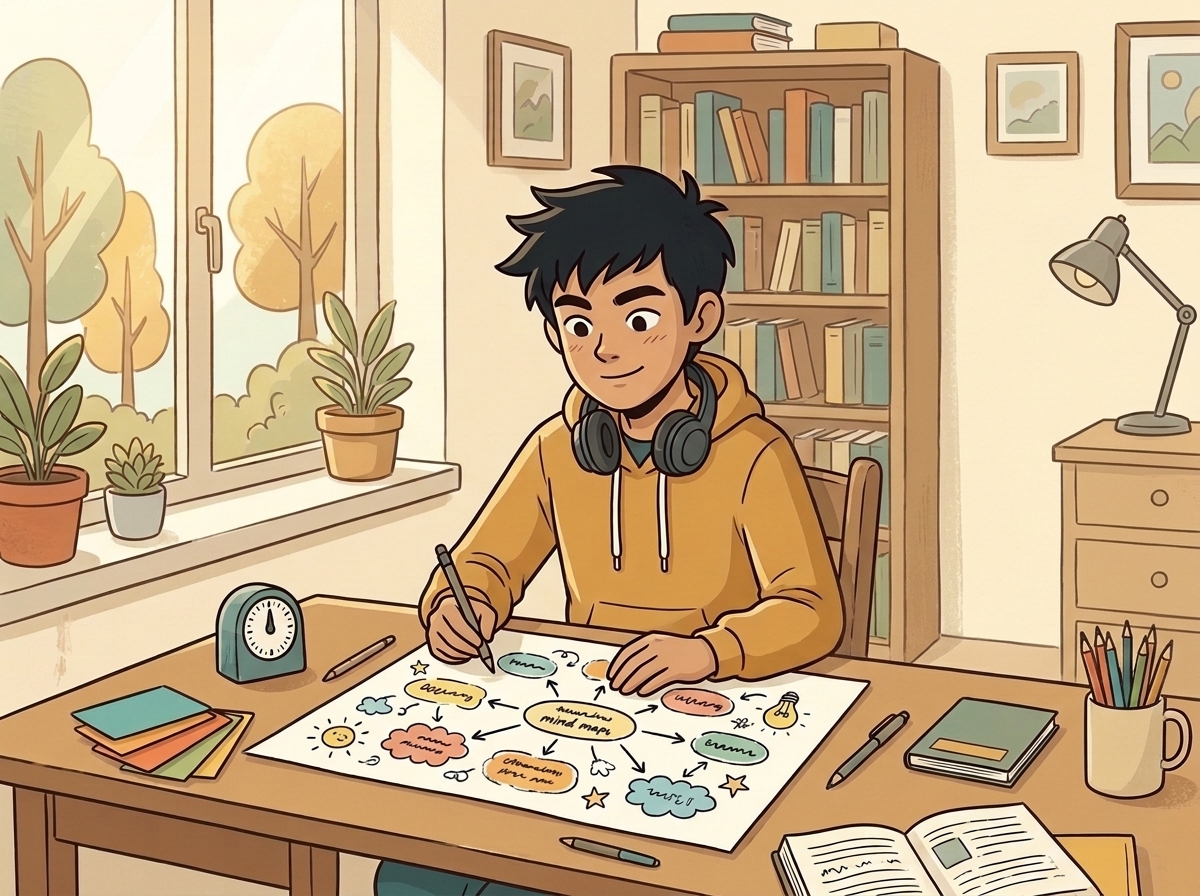
Frameworks like PEEL, mind maps and checklists show what a good answer looks like, so children spend less energy guessing.
Offer a choice of format
Some children understand best by listening, some by watching, some by reading. Let them pick, and switch when they're tired.
When to talk to the school
If difficulties last beyond the first term, or your child seems unhappy, speak to the form teacher. Many schools have staff who support students with different learning needs, and the form teacher can point you to them. You don't need a diagnosis to start that conversation.
Why we built Our Study Tribe this way
We design for different ways of thinking from the start, rather than patching them in later. In Our Study Tribe that means lessons of about five minutes, captions and adjustable speed, a reader that reads aloud, quick checks that pause the video, reviews spaced over days, and a small tribe of friends to keep going with.