Why Was the British Withdrawal Such a Problem?
Why Was the British Withdrawal Such a Problem?
Singapore had relied on Britain for its defence since 1819, but in 1967 Britain announced it would withdraw its forces. These notes explain why Britain left and three reasons the was such a serious problem: it would leave Singapore practically defenceless, Singapore's own army was far too small, and thousands of jobs and future investment were at risk.
A Safety Net Since 1819
- British protection: since 1819, Singapore had relied on the British Empire for its defence, with troops from Britain, India and Australia.
- Few local forces: local units had existed since the 1800s, but they were small.
- A major base: Britain developed Singapore into a major naval base in the 1920s and 1930s, and expanded it with warships and airbases in the 1950s.
- A large presence: thousands of British and Commonwealth servicemen were stationed in Singapore.
Why Britain Left
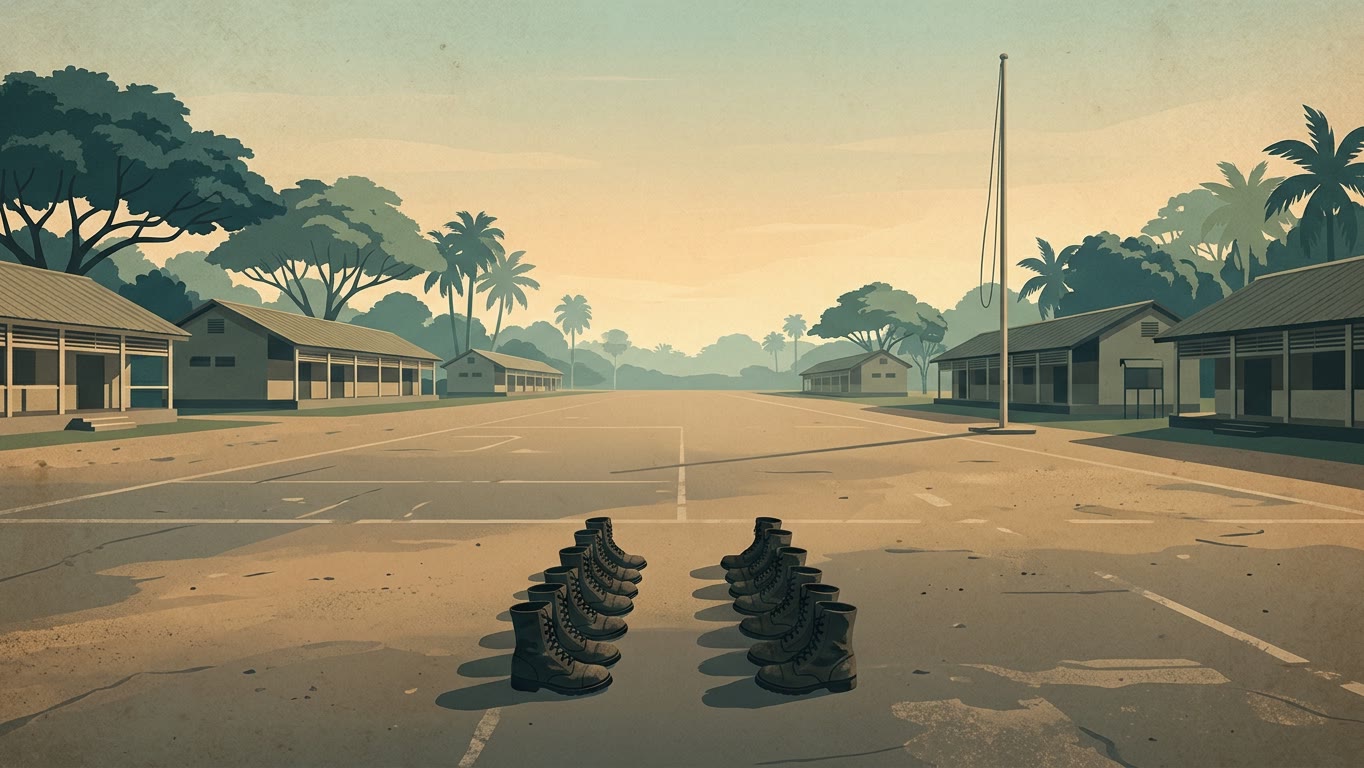
- Rising costs: by the 1960s Britain could no longer afford the expense of its forces in Asia.
- Problems at home: it needed to focus its resources on rebuilding its own economy.
- Less need: with the Malayan Emergency over and Konfrontasi ended, Britain judged the cost no longer justified.
- The timetable: announced in 1967, the withdrawal left Singapore little time to prepare; most forces had gone by 1971 and the last by 1976.
- Talks: Lee Kuan Yew flew to London in January 1968 to discuss the withdrawal with Prime Minister Harold Wilson.
Why Was the British Withdrawal Such a Problem?
Reason 1: Left Almost Undefended
- PPointThe British withdrawal was a serious problem because it would leave Singapore practically defenceless.
- EEvidenceThree weeks after independence, Lee Kuan Yew said he wanted the British bases to protect his people, because Singapore lacked the means to do so itself. In December 1965, Dr Goh Keng Swee warned Parliament that without the British, any neighbour could easily overrun the island.
- EElaborationSingapore had never had to defend itself, so the departure of the force that had guaranteed its security, coming on top of Konfrontasi and other regional threats, would remove its main protection before it had any of its own.
- LLinkHence, the withdrawal made building Singapore's own defence an urgent necessity.
Reason 2: Too Few Soldiers
- PPointThe withdrawal was a problem because Singapore's own army was far too small to replace the British.
- EEvidenceAt independence, Singapore had only two of infantry, each of about 50 officers and 1,000 men. In 1942, the British had about 90,000 men and still failed to stop the Japanese, and during Konfrontasi about 50,000 British servicemen were stationed in the region.
- EElaborationIf 90,000 troops could not hold Singapore in 1942, about 2,000 men stood little chance against a determined attacker, so the gap between Singapore's needs and its forces was enormous.
- LLinkThus, the tiny size of its army meant Singapore had to expand its forces rapidly, which pointed towards conscription.
Reason 3: Jobs at Risk
- PPointThe withdrawal was a problem because it threatened jobs and economic growth as well as security.
- EEvidenceThe British bases employed tens of thousands of local people, directly and indirectly, who provided goods and services to the British military.
- EElaborationThe closure of the bases would add to unemployment, and without the peace and stability that security brings, foreign investors would hesitate to set up factories and businesses. A defenceless Singapore would therefore struggle to create the new jobs it needed.
- LLinkTherefore, the withdrawal was an economic as well as a military threat, which is why the government moved quickly to strengthen Singapore's security.
Regulars, Volunteers and Conscripts
- Regulars: professional soldiers who serve full-time as a career.
- Volunteers: people who serve part-time, by choice.
- Conscripts: people required by law to serve full-time for a set period.
- Forced self-reliance: with only a few regulars and volunteers, Singapore had to build its own defence rapidly, making conscription the only realistic option.
In One Sentence
- Britain withdrew because it could no longer afford its bases, and the withdrawal threatened to leave Singapore practically defenceless, with a tiny army and thousands of jobs at risk.
Think About It
- The British had about 90,000 men in 1942 and still lost Singapore. What does that tell you about how hard it would be for Singapore to defend itself in 1967?
- How was the loss of the British bases a problem for the economy as well as for defence?
- If you were a Singapore leader in 1967, would you have tried to persuade Britain to stay, or started building your own defences straight away? Why?