How Did Diplomacy Keep Singapore Safe?
How Did Diplomacy Keep Singapore Safe?
Singapore's second approach to security was : establishing and maintaining official, friendly relations with other countries. Because a new nation could not take recognition for granted, Singapore needed friends with a stake in its survival. These notes explain three ways diplomacy kept Singapore safe: ties, reconciliation with Indonesia, and membership of the United Nations and .
Why Diplomacy Mattered
- What it means: setting up and keeping official relations between governments, usually through embassies and diplomats.
- No guaranteed recognition: hostile states could deny a new nation's right to exist and pressure or even invade it.
- Friends with a stake: good relations meant countries that recognised Singapore's independence and wanted it to stay safe.
- Practical benefits: friendly ties also opened access to military training and advanced technology.
How Did Diplomacy Keep Singapore Safe?
Way 1: Friends, One by One
- PPointDiplomacy kept Singapore safe by building bilateral relations with as many countries as possible.
- EEvidenceSingapore strengthened ties with Commonwealth countries such as Australia, Britain and Malaysia and reached out to the United States, befriending countries on both sides of the Cold War. It opened missions in states such as India, Egypt and Cambodia, set up a mission in Moscow in 1971, and Lee Kuan Yew first visited China in 1976.
- EElaborationBy befriending both sides and explaining its security concerns, Singapore avoided being seen as the client of either bloc and gave many nations an interest in its survival, making it harder for any country to threaten it without international disapproval.
- LLinkHence, a wide network of bilateral friendships strengthened Singapore's security.
Way 2: Mending Ties with Indonesia
- PPointDiplomacy kept Singapore safe by repairing relations with Indonesia.
- EEvidenceThe execution in 1968 of the two Indonesian soldiers convicted of the MacDonald House bombing provoked an angry reaction in Jakarta. In 1973, Lee Kuan Yew visited Jakarta and scattered flowers on their graves. Singapore's first ambassador to Indonesia stressed that, as the biggest and closest neighbour, Indonesia could do Singapore great harm if relations were poor.
- EElaborationThe gesture acknowledged Indonesian feelings without reversing Singapore's legal decision, allowing both governments to move beyond the bitterness of Konfrontasi and reducing the risk of hostility from Singapore's largest neighbour.
- LLinkThus, reconciliation with Indonesia removed one of the gravest threats to Singapore's security.
Way 3: Joining the UN and ASEAN
- PPointDiplomacy kept Singapore safe through membership of international and regional organisations.
- EEvidenceOn 21 September 1965, Singapore became the 117th member of the United Nations, which also gave it access to development aid and expert advice. In 1967, with Foreign Minister S. Rajaratnam, it co-founded ASEAN to halt the spread of communism and promote regional growth and peace. When Vietnam invaded Cambodia in 1978, ASEAN worked with the UN, the United States and China to press for its withdrawal.
- EElaborationUN membership confirmed Singapore's sovereignty in the eyes of the world, while ASEAN turned neighbours into partners and gave a small state a collective voice, so threats could be addressed through shared diplomacy rather than force alone.
- LLinkTherefore, membership of the UN and ASEAN secured Singapore's recognition and a voice in regional affairs.
ASEAN in Focus
- Founded: in Bangkok in 1967, by the foreign ministers of Thailand, the Philippines, Singapore, Malaysia and Indonesia.
- Its aims: to halt the spread of communism during the Cold War and to promote economic growth, social progress and cultural development.
- Multilateral cooperation: several countries working together, for example to increase trade among members and keep the region peaceful.
- Security through friendship: by giving other countries a stake in its survival, diplomacy made an attack on Singapore far less likely.
S. Rajaratnam
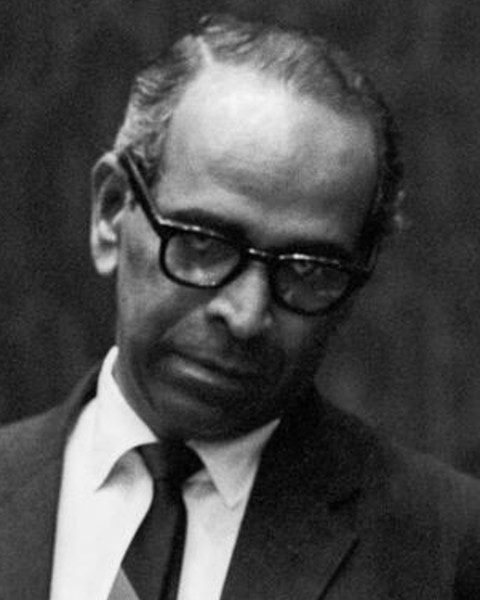
- Early life: born in Sri Lanka, he moved to Malaya as a child; as a journalist he openly opposed British colonial rule.
- In politics: he helped found the PAP in 1954 and became Minister for Culture in 1959.
- Foreign Minister: as Singapore's first Foreign Minister, he secured its place in the world and helped found ASEAN.
- The Pledge: he played a major part in drafting the National Pledge, reflecting his belief in multiracialism and unity.
In One Sentence
- Diplomacy kept Singapore safe by building friendships on both sides of the Cold War, reconciling with Indonesia, and securing recognition and a voice through the UN and ASEAN.
Think About It
- Singapore made friends with countries on both sides of the Cold War. Why might that have been safer than choosing one side?
- Scattering flowers on two graves was a small gesture. Why could such a small act help to repair such a big quarrel?
- Besides recognition, what other benefits could a small country get from joining the UN and ASEAN?