Why Did Singapore Introduce National Service?
Why Did Singapore Introduce National Service?
With Britain withdrawing and only about 2,000 regular soldiers, Singapore introduced (NS) in 1967: , under which the law requires young men to serve in the armed forces. These notes explain three reasons for NS (the need for a large army quickly, the end of reliance on others, and ), how young men responded, and why NS is judged so significant.
The Problem: Too Few Soldiers
- Two approaches: Singapore met its security challenges through deterrence, a credible force that makes enemies think twice, and diplomacy, strong ties around the world.
- A failed precedent: the British passed a National Service Ordinance in 1954, but resistance was so strong that conscription was never carried out under British rule.
- A new decision: after independence, the government judged conscription the only way to raise a credible defence force, and introduced NS in 1967.
Why Did Singapore Introduce National Service?
Reason 1: Too Few, Too Little Time
- PPointSingapore introduced NS because conscription was the only way to build a large army quickly.
- EEvidenceWith Britain withdrawing, Singapore had only about 2,000 regular soldiers, while Konfrontasi had only just ended, the Vietnam War was escalating and communist groups were still active at home. Under NS, thousands of young men were called up for at least two years of full-time service.
- EElaborationRegulars and volunteers alone could never be recruited in sufficient numbers in time, whereas conscription brought in a steady stream of trained men every year, so the SAF could grow rapidly despite the danger all around.
- LLinkHence, NS was the fastest way to close the gap left by the British withdrawal.
Reason 2: No More Relying on Others
- PPointSingapore introduced NS because its people could no longer rely on others to defend them.
- EEvidenceDr Goh Keng Swee told Parliament that British protection had made some citizens complacent, assuming it would last forever, and called that belief "the height of folly".
- EElaborationWith Britain leaving, continued dependence would leave Singapore at the mercy of other countries' decisions. NS made defence the duty of every citizen, and after full-time service men became who could be called up in an emergency.
- LLinkThus, NS turned self-reliance from an idea into a national duty.
Reason 3: Make Enemies Think Twice
- PPointSingapore introduced NS because a large, trained force would deter aggression.
- EEvidenceDeterrence means a defence force strong enough that any attack would fail or cost too much. A man who enlisted in 1977 summed it up: with NS, Singapore was "no longer easy meat".
- EElaborationA citizen army backed by a growing pool of reservists signalled that any attack would meet determined resistance, so potential aggressors would think twice; NS was designed as much to prevent war as to fight one.
- LLinkTherefore, NS became the foundation of Singapore's deterrence.
How Young Men Felt
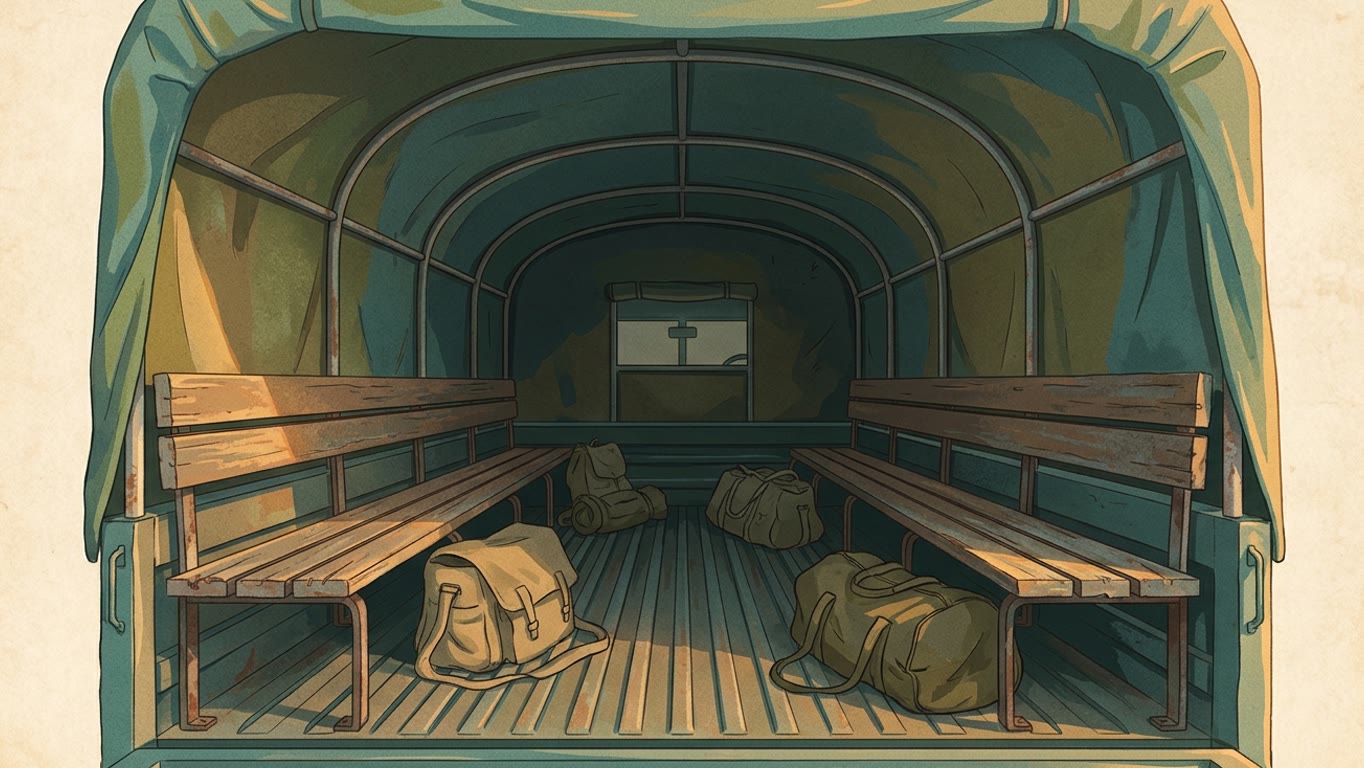
- The first intake: about 9,000 young men born in 1949 registered in 1967, the first step in turning a civilian population into a citizen army.
- Lost income: poorer families depended on their sons' wages, so NS caused real hardship; one 1969 recruit tried to avoid it because he would be paid only $60.
- A new way of life: few Singaporeans had known military life; training was physically demanding and many families worried about their sons.
- Pride and duty: others saw NS as necessary; a 1971 recruit felt the threat was close, and a 1977 recruit said NS made him proud, showing growing acceptance.
How Significant Was NS?
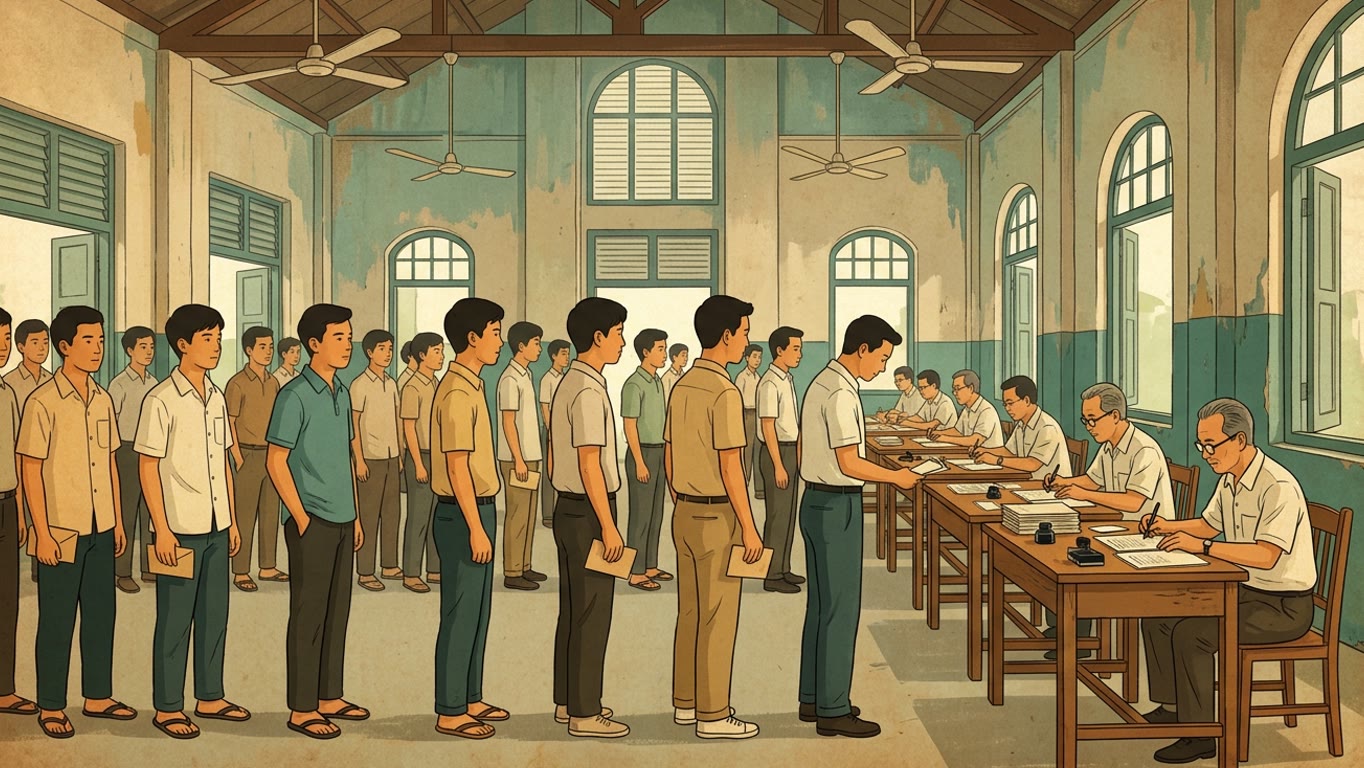
- How many: thousands of young men were called up every year from 1967, and their families were affected too.
- How much: men served at least two years full-time, then reservist duty, in a disciplined life very different from before.
- How long: NS remains the foundation of Singapore's defence today, with national servicemen forming most of the SAF's fighting force.
- A shared experience: by bringing together men of every race, religion and background, NS fostered a common experience and a stronger national identity.
In One Sentence
- Singapore introduced National Service in 1967 because it needed a large army quickly, could no longer rely on Britain, and wanted a force that would deter aggression, and NS brought far-reaching and lasting change.
Think About It
- In 1954, conscription was so unpopular that it never happened. Why do you think Singaporeans accepted it more readily in 1967?
- A recruit in 1969 worried about his family's income, while a recruit in 1971 felt NS was very necessary. Why might two young men feel so differently about the same law?
- Of the three tests (how many, how much, how long), which one shows most clearly that NS was significant? Explain your choice.