What Was Trade Like Before Singapore Existed?
What Was Trade Like Before Singapore Existed?
Long before Singapore appeared on any map, goods moved between China and Europe in two ways: overland along the and by sea along the . These notes explain how the sea route took over by the 7th century, as the Silk Road became less safe and stronger ships made sea travel faster, and how the ports where ships stopped grew rich enough to become maritime kingdoms. This set the stage for the kingdoms of Southeast Asia, and later Singapore.
Why it matters
This showed that the world was trading for centuries before Singapore's story begins. Singapore did not create these trade routes; it later grew up on one of them, so its rise depended on trade that already existed.
Why it matters
This marked the rise of the main overland route between China and Europe. Because the Roman Empire controlled much of the Middle East and Europe, Chinese silk, the route's star export and the source of its name, was headed for Roman markets.
Why it matters
As a result, became riskier and less appealing. This contributed to the shift of trade to the sea, as traders looked for a safer way to move their goods.
Why it matters
This was significant because stronger ships moved goods and people faster by sea, bringing trade through Southeast Asian waters. As a result, the region's spices, scented wood and shells reached China and India, while Chinese silk and ceramics travelled as far as Europe.
Why it matters
Ships stopped to rest, repair, refuel, restock or wait for the . As a result, steady traffic made some ports rich enough to grow into maritime kingdoms, which set the stage for the next video.
Two Ways to Trade
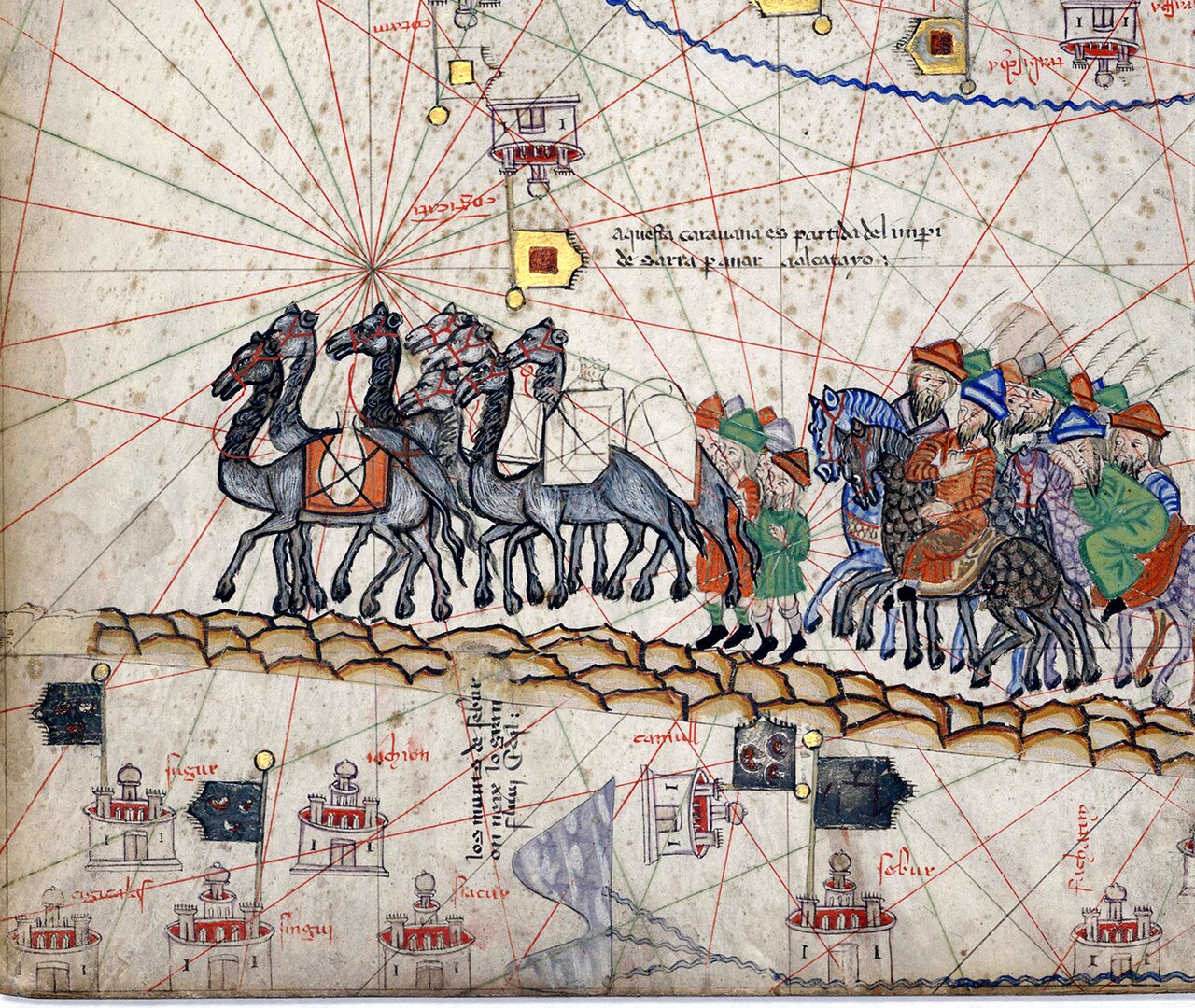
- The Silk Road: a network of land routes linking China, through Central Asia, to the Roman Empire, which controlled much of the Middle East and Europe.
- Its name: the term "Silk Road" was only invented in 1877 by the German traveller Ferdinand von Richthofen; the ancient Greeks called China "Seres", the "land of silk".
- The sea route: ships sailed from China, past Southeast Asia and India, to the Middle East; this maritime route is also called the Spice Routes.
- The switch: as the Silk Road became less safe and harder to travel, traders relied on the sea route instead, which brought trade through Southeast Asian waters.
What Was Traded
- From China: silk and ceramics, wanted as far away as Europe.
- From Southeast Asia: spices, scented wood and shells, highly valued in China and India, so the region had goods of its own to sell.
- Better ships: by the 7th century, stronger ships moved goods and people faster by sea, which enabled the sea route to overtake the land route.
- PPointPorts along the sea route grew into kingdoms because passing ships brought them steady business and wealth.
- EEvidenceTravellers stopped at ports to pick up goods to trade. They also bought food and water, repaired their ships, or waited for good weather before sailing on.
- EElaborationEvery stop meant traders spending money and exchanging goods locally, so the ports that ships used most often built up wealth, and that wealth could pay for rulers, fleets and control over nearby lands.
- LLinkTherefore, the shift to sea trade allowed some ports to become maritime kingdoms, the kind of power that would rise in Southeast Asia.
In One Sentence
- Trade between China, India and Europe moved from the less safe Silk Road to the sea, and the ports where ships stopped grew rich enough to become maritime kingdoms.
Think About It
- The Silk Road and the sea route both linked China and Europe. What made the sea route win in the end?
- A port that mainly rests and resupplies ships can still become rich. How?
- The Silk Road was named after China's most famous export. If you named the sea route after Southeast Asia's goods, what would you call it, and why?