How Did Temasek Become a Trading Centre?
How Did Temasek Become a Trading Centre?
had hardly any farmland, yet by the 14th century it was a trading centre. These notes explain three reasons: 's shifted trade north onto Temasek's route, Temasek's advantages as an at the midpoint between the Middle East, India and China let it make the most of that trade, and growing trade with China brought more business. Archaeological finds and 's record provide the evidence.
Temasek Becomes Singapura
- The founding story: the Sejarah Melayu (Malay Annals), a 17th-century text, says a prince from Palembang, Sang Nila Utama (also called Sri Tri Buana), came to the island of Temasek.
- The lion: near the river mouth he saw a strange, strong animal, was told it was a singha, or lion, and decided to settle there.
- The new name: around 1299 he renamed the island Singapura.
- A note of caution: the story was written about 300 years after the events, so historians treat it carefully and check it against other evidence.
How Did Temasek Become a Trading Centre?
Reason 1: Srivijaya's Decline
- PPointOne reason why Temasek became a trading centre was the decline of Srivijaya, which shifted trade towards the .
- EEvidenceFrom the 11th century, Srivijaya was attacked by the of southern India, the Siamese Kingdom and , which took it over. Around the 13th century, merchants also switched from the to the Straits of Melaka to shorten their journeys.
- EElaborationAs Srivijaya lost its position as an important maritime kingdom, it could no longer draw trade to its own ports, and the merchants' change of route meant more ships passed through the Straits of Melaka, so ports there, including Temasek, gained the business.
- LLinkHence, Temasek did not move to the trade; the trade moved to it, giving it the chance to rise.
Reason 2: Temasek's Advantages
- PPointAnother reason why Temasek became a trading centre was its own advantages as an entrepôt at a strategic midpoint.
- EEvidenceTemasek became an entrepôt, a port that collects and distributes goods, with a rich supplying special products, at the midpoint between the Middle East, India and China. It was also a that paid to its , (Thailand today), and received protection in return.
- EElaborationBecause Temasek sat in the middle, traders from different regions could meet there to exchange goods without sailing all the way to each other's countries, while its hinterland gave them local products to buy and Siam's protection made it safer to trade.
- LLinkThus, Temasek was able to make the most of the trade that Srivijaya's decline sent its way.
Reason 3: Growing Trade with China
- PPointA third reason why Temasek became a trading centre was the growth of trade between China and Southeast Asia.
- EEvidenceChinese traders sought goods such as cotton, ivory, sea cucumbers and hornbill casques from the region. Chinese ceramics such as bowls, plates and cups have been dug up near the , and the Chinese traveller Wang Dayuan wrote about Temasek in 1349.
- EElaborationRising Chinese demand for the region's products brought more Chinese ships to ports such as Temasek. Ceramics were typical trade items, so finding them shows that goods from China were exchanged there, and Wang Dayuan's record confirms that Chinese traders visited in the 14th century.
- LLinkTherefore, growing trade with China brought Temasek more business and connected it directly to one of the world's greatest economies.
What Archaeologists Found
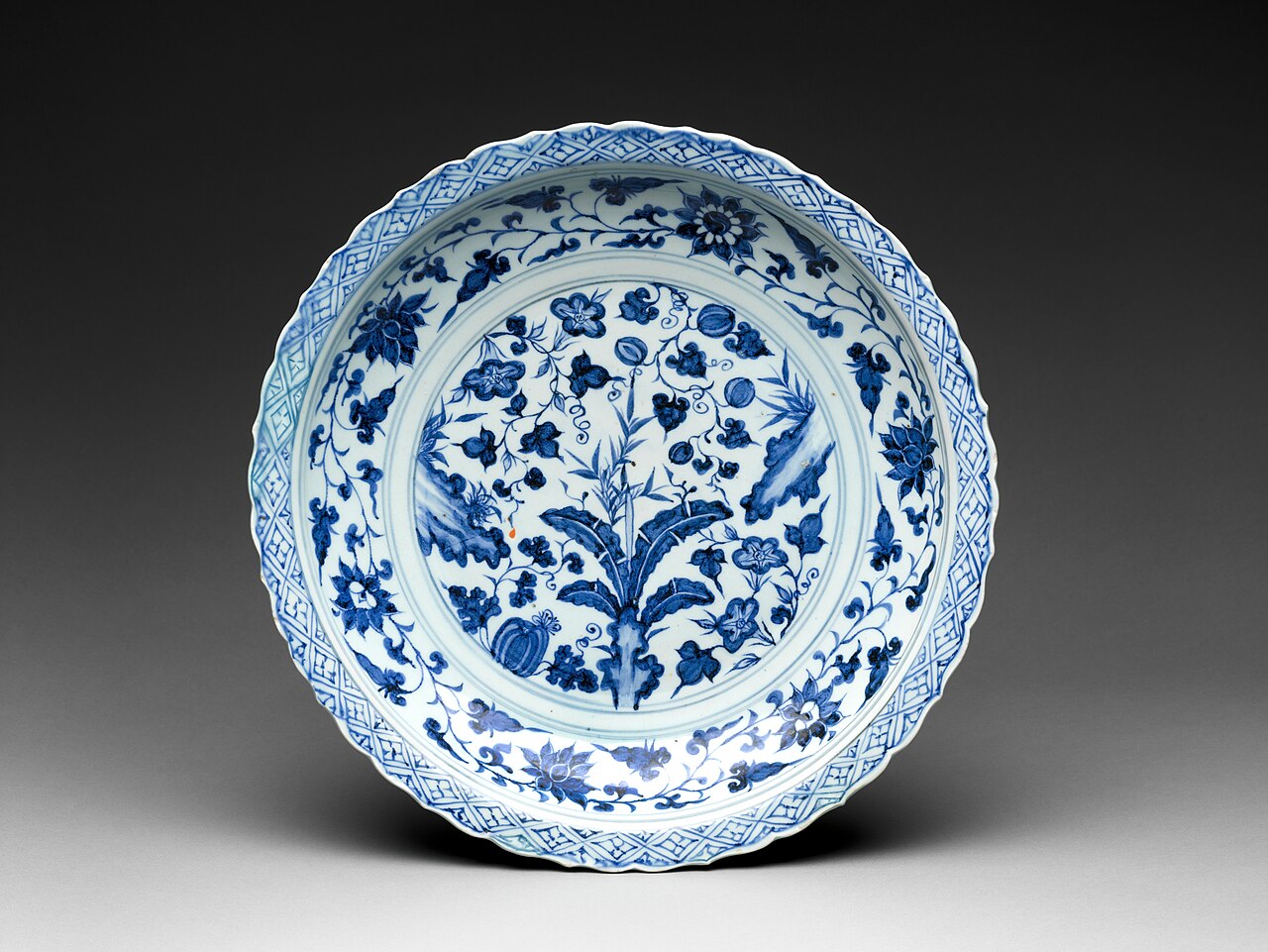
- Digging since the 1920s: archaeologists have found at Fort Canning and around the Singapore River, including expensive Chinese porcelain and gold ornaments, evidence of a wealthy settlement.
- Fort Canning Hill: gold ornaments were found in 1928, and about 30,000 artefacts from the 14th century have been recorded there, most of them glass beads.
- Parliament House Complex: digs in 1994 and 1995 found Chinese porcelain from the late 13th to early 15th century, which corroborates the trade with China.
- Empress Place: digs in 1998 and 2015 found more evidence of Singapore before 1819, such as a Majapahit-style horseman figure from about the 14th century.
- Wang Dayuan's record: he described communities of local people and Chinese on the island, their farming, and the fact that some were pirates.
In One Sentence
- Temasek became a 14th-century trading centre because Srivijaya's decline sent trade its way, its position as a protected entrepôt at the midpoint made it a meeting place for traders, and growing trade with China brought more business.
Think About It
- Temasek had almost no farmland. Why didn't that stop it becoming rich?
- Wang Dayuan's record and the ceramics dug up tell the same story. Why is it stronger to have both kinds of evidence?
- The story of the lion comes from a text written about 300 years later. How far should historians trust it?