How Did Singapore Industrialise?
How Did Singapore Industrialise?
, the large-scale development of manufacturing, was the main way Singapore diversified its economy. These notes explain three ways it industrialised: adopting an strategy, attracting multinational corporations (), and building such as Jurong. The results were dramatic: almost 150,000 jobs between 1967 and 1973 and, by the early 1970s, a shortage of workers.
From Swamp to Factories

- Industrialisation: developing manufacturing on a large scale, using technology and machinery.
- An early plan: even before merger, the government saw industrialisation as the key to diversifying the economy.
- Expert advice: Dr Albert Winsemius, a Dutch economist, led a United Nations study recommending industrialisation and advised the government from 1961 to 1984.
- The Economic Development Board (EDB): announced by Dr Goh Keng Swee in 1961 to attract foreign companies to set up factories.
How Did Singapore Industrialise?
Way 1: Selling to the World
- PPointSingapore industrialised by switching to an export-oriented strategy.
- EEvidenceGoods from the new factories were first meant for Singapore and the Malaysian hinterland. After independence that was no longer practical, so Singapore adopted an export-oriented policy, selling most of its manufactured goods worldwide; the EDB, set up in 1961, now targeted the world instead of Malaysia.
- EElaborationSelling to the world gave factories a far larger market than Malaysia could offer and freed them from one neighbour's tariffs, so industries could expand rapidly. The EDB's continuity, with a changed target, shows change and continuity at work.
- LLinkHence, an export-oriented strategy allowed industrialisation to grow beyond the limits of the local market.
Way 2: Bringing in Big Companies
- PPointSingapore industrialised by attracting multinational corporations (MNCs).
- EEvidenceHundreds of MNCs from countries such as the Netherlands, Britain, Japan and the United States set up in Singapore, including Shell, Seiko and Hewlett-Packard. Singapore offered lower taxes, five-year tax holidays under pioneer status, low crime and a stronger defence, a large, young workforce, cooperative unions, and land ready for factories.
- EElaborationMNCs brought the capital, technology, overseas markets and expertise that Singapore lacked, so they created jobs quickly and trained local workers in new skills.
- LLinkThus, MNCs became the engine of Singapore's industrialisation.
Way 3: Building Industrial Estates
- PPointSingapore industrialised by preparing industrial estates ready for factories.
- EEvidenceFrom 1961, the EDB transformed almost 70 square kilometres of Jurong into Singapore's first industrial estate, and more estates followed. In 1968, the Jurong Town Corporation (JTC) took over building and managing them, and also built amenities such as Jurong Bird Park.
- EElaborationReady-prepared sites with roads and utilities let companies start production quickly, cutting costs and delays, while freeing the EDB to concentrate on attracting investors.
- LLinkTherefore, industrial estates made Singapore an attractive and efficient place to set up factories.
Did It Work?
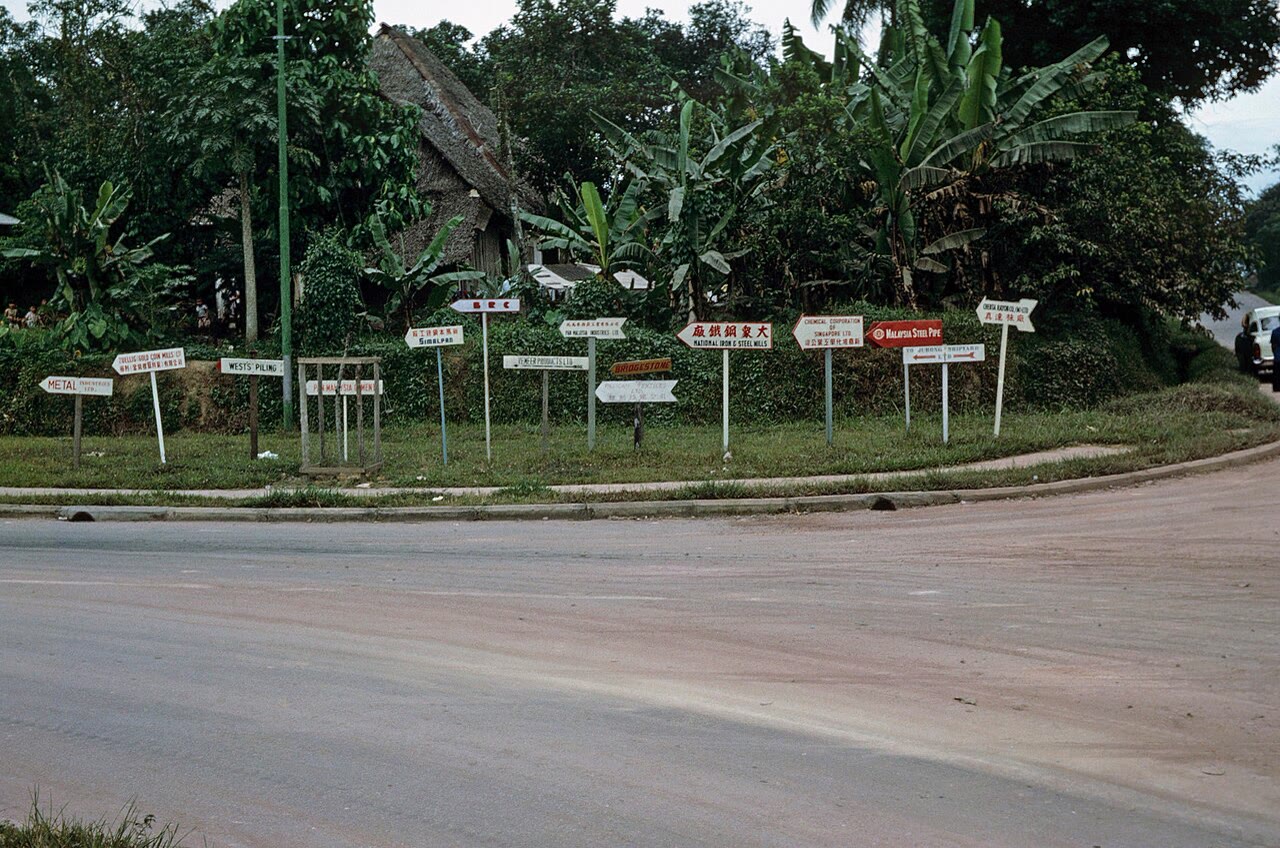
- New industries: electronics, petroleum refining, ship building and repair, and garments and textiles grew rapidly.
- Full employment: almost 150,000 jobs were created between 1967 and 1973, and by the early 1970s a labour shortage meant foreign workers had to be recruited.
- Fast growth: until 1973, the economy grew by more than 10% a year.
- Skills for locals: MNC training let local workers take over jobs once done by foreigners.
In One Sentence
- Singapore industrialised by selling to the world, attracting MNCs and building industrial estates, which created full employment and rapid economic growth.
Think About It
- MNCs wanted low costs and profits; Singapore wanted jobs and skills. Who do you think gained more from the deal, and why?
- In 1965, Singapore had too few jobs. By the early 1970s, it had too few workers. How did that change happen so quickly?
- Why might it be risky for a country to rely heavily on foreign companies for its jobs?