How Did Singapore Become Healthier and Cleaner?
How Did Singapore Become Healthier and Cleaner?
Overcrowding, open drains and poor hygiene made disease widespread in the 1950s and 1960s, and in 1965, 27.3 of every 1,000 babies died before their first birthday. These notes explain three ways Singapore became healthier and cleaner: cleaning up the environment, regulating hawker food, and improving healthcare for all, which together more than halved infant mortality by 1976.
The Health Problem
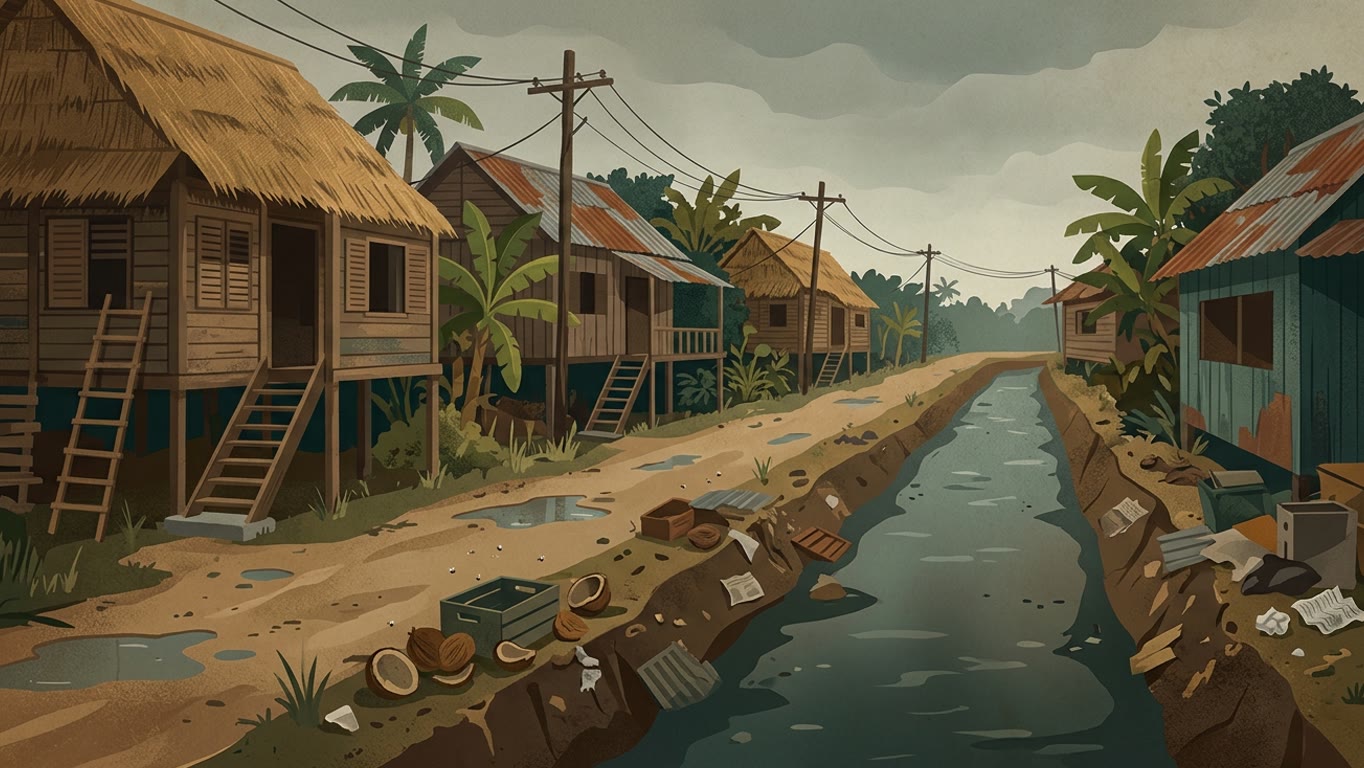
- Dirty surroundings: one man remembered the drain near his kampong house as almost an open sewer.
- Widespread disease: rubbish attracted flies and mosquitoes, and people fell ill with malaria, typhoid and tuberculosis.
- Babies at risk: in 1965, the was 27.3 deaths for every 1,000 babies born.
- Why it mattered: an unhealthy population would hold back the new nation's development.
How Did Singapore Become Healthier and Cleaner?
Way 1: Clean Up the Environment
- PPointSingapore became healthier by cleaning up the environment.
- EEvidenceSquatters living beside waterways were rehoused in HDB estates to protect the water supply. From 1968, littering and spitting were punishable by fines as part of the Keep Singapore Clean campaign, and rubbish collection improved. Drains and canals were widened against the floods that spread dengue and cholera, and the Clean Air Act of 1971 controlled factory pollution.
- EElaborationRemoving the sources of contamination, from polluted water and rubbish to floodwater and factory fumes, cut the ways disease could spread, while fines changed public habits.
- LLinkHence, a cleaner environment sharply reduced the spread of disease.
Way 2: Clean Up the Hawkers
- PPointSingapore became healthier by making hawker food safe.
- EEvidenceThere were about 50,000 street hawkers, 80% of them unlicensed and many lacking knowledge of hygiene. All hawkers had to be licensed, follow hygiene rules, and be screened and vaccinated, and from 1970 they were moved into with running water, electricity and proper waste disposal, such as Empress Place Food Centre (1973).
- EElaborationBecause so many people ate hawker food every day, making it safe reduced food poisoning across the whole population while preserving an affordable way of eating.
- LLinkThus, regulating hawkers protected public health on a large scale.
Way 3: Better Healthcare for All
- PPointSingapore became healthier by improving healthcare for all.
- EEvidenceUnder Health Minister Yong Nyuk Lin and his successors, campaigns taught nutrition, care for mothers and babies, and the value of . Hospitals such as Tan Tock Seng and Thomson Road were expanded and outpatients moved to separate clinics, while the School Health Service brought vaccinations and check-ups into schools and every new school had a dental clinic. In 1966, Kandang Kerbau was the world's busiest maternity hospital, with 39,856 births.
- EElaborationBringing prevention and treatment to every family, especially children, caught illness early and protected the very large number of babies being born.
- LLinkTherefore, better healthcare drove a dramatic fall in infant mortality.
The Result
- Healthier people: these measures together greatly improved the population's health.
- Infant mortality more than halved: it fell from 27.3 per 1,000 births in 1965 to 11.8 by 1976.
- Catching up: by the mid-1970s, Singapore's rate was close to, and then below, those of the United States, Britain and Australia.
- Homes helped too: cleaner, roomier HDB flats also slowed the spread of disease.
In One Sentence
- By cleaning up the environment, making hawker food safe and improving healthcare, Singapore became healthier, and infant mortality more than halved, from 27.3 to 11.8 per 1,000 births.
Think About It
- Littering and spitting became punishable by fines in 1968. Do you think fines or education campaigns do more to change people's habits? Why?
- Why is the infant mortality rate seen as a good way to measure the health of a whole country?
- Which health problem do you think was the most urgent for the new government to fix, and why?