How Did Singapore Change After 1965, and Who Are the Key Figures?
How Did Singapore Change After 1965, and Who Are the Key Figures?
Independence in 1965 left Singapore facing urgent economic and social challenges as well as security threats. These notes set out the timeline from 1959 to 1979, the people who led the response, and the chapter's central concept: , and the , used to judge how far people's lives were transformed.
Why it matters
This showed continuity, as some of the changes in this chapter began even before independence. The state symbols created in 1959 later became national symbols that helped build a Singaporean identity after 1965.
Why it matters
This marked the start of a major change in housing, as the HDB built flats quickly and at prices people could afford. It also showed continuity, as the HDB kept building flats after independence.
Why it matters
This was significant because it showed that, even before merger, the government saw as the key to diversifying the economy. After 1965, the EDB switched to an export-oriented policy and attracted MNCs.
Why it matters
This marked a turning point, as Singapore lost easy access to the Malaysian market and faced high unemployment. As a result, independence started a period of much faster change, in the economy and in society.
Why it matters
This was significant because the pink identity card made being a Singapore citizen clear and separate. It was a physical symbol of being Singaporean, with rights like voting, which helped build a national identity.
Why it matters
This contributed to a sense of belonging, as students recited the Pledge, which stressed bridging the divide between the races, every school day. Schools still hold these ceremonies today, showing the change lasted.
Why it matters
This was significant because over 40,000 people depended on supplying goods and services to the British servicemen. As a result, unemployment threatened to worsen, making new industries and jobs even more urgent.
Why it matters
This enabled factories to arrive and start work quickly in estates with the facilities they needed. It also left the EDB free to focus on attracting foreign investors, which helped industries grow fast.
Why it matters
This was significant because many unlicensed street hawkers posed a risk of food poisoning. Hawker centres with running water, electricity and proper waste disposal made daily meals much cleaner and safer.
Why it matters
This marked the end of Singapore's reliance on the British bases for jobs as well as defence. Shops near the bases, such as those in Changi Village, lost business, but by the early 1970s new industries had created many jobs.
Why it matters
This showed that Singapore remained vulnerable, as its success was tied to the world economy. Prices rose and growth slowed sharply, so the government raised wages, and by 1976 Singapore had recovered.
Why it matters
This showed that change in education continued after the 1960s, as the report said each child should learn at a pace that suits their ability. It also showed that not every problem had been solved by the end of the 1970s.
After 1965: New Challenges
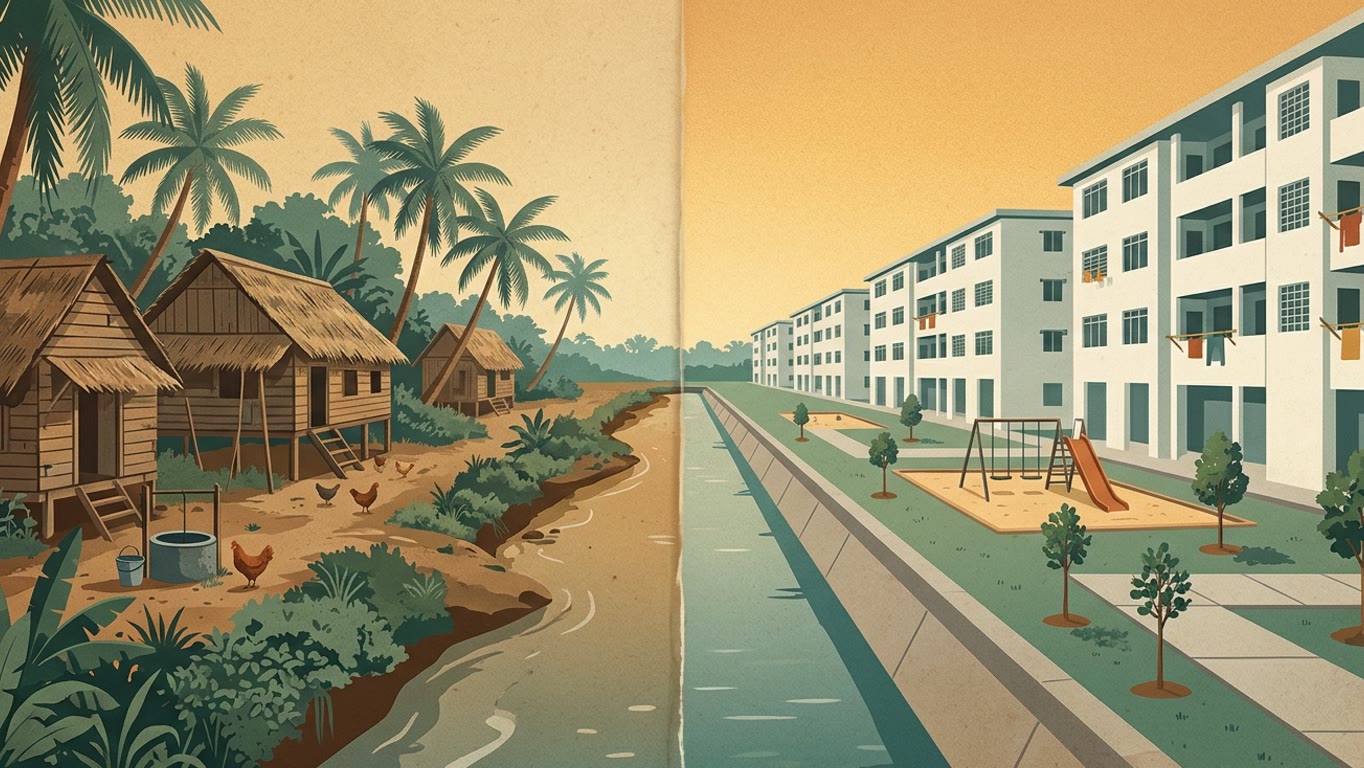
- Beyond security: after independence, Singapore's survival was also threatened by economic and social problems that demanded urgent action.
- Three areas: the government had to tackle challenges to the economy, national identity and society.
- Building on the past: many measures built on efforts begun under the colonial and self-governing governments.
- The outcome: by the end of the 1970s, life in Singapore had been transformed in many ways.
The Historian's Tool: Change and Continuity
- Change and continuity: historians compare what changed over time with what stayed the same.
- Pace of change: change does not happen at one speed; some events accelerate it, others slow it down.
- 9 August 1965: some changes began before independence, but independence launched a period of much faster economic and social change.
- Questions to ask: how quickly and how greatly did things change, how did people react, and what continued?
Key People and Their Impact
- Dr Goh Keng Swee: announced the Economic Development Board in 1961, laying the foundations of industrialisation, and led the 1979 review of education.
- Dr Albert Winsemius: the Dutch economist whose United Nations study recommended industrialisation; he advised the government from 1961 to 1984.
- Lim Kim San: first Chairman of the HDB, whose drive to build fast tackled the housing shortage.
- Dr Toh Chin Chye: coordinated the creation of the flag, crest and anthem in 1959, which became national symbols at independence.
- S. Rajaratnam: revised the National Pledge to stress unity across races.
The Chapter's Questions
- What economic and social challenges did Singapore face after it gained independence in 1965?
- How did Singapore overcome these challenges?
- How had people's lives changed by the end of the 1970s?
In One Sentence
- After 1965, Singapore faced serious economic and social challenges, and its response transformed people's lives, faster after independence than before, though many changes built on earlier foundations.
Think About It
- The HDB was set up in 1960 and the EDB in 1961, before independence. Why might it matter that some changes started before 1965?
- Why do you think independence made change speed up instead of slow down?
- Think of one thing in your own life that has changed and one that has stayed the same over the last five years. Which was easier to notice, and why?