What Led to Merger and Separation, and Who Are the Key Figures?
What Led to Merger and Separation, and Who Are the Key Figures?
Full internal self-government in 1959 left Britain in control of Singapore's defence and foreign affairs, so the PAP government saw with Malaya as the route to full independence. Singapore joined Malaysia on 16 September 1963, yet less than two years later, on 9 August 1965, it became a nation on its own. These notes set out the road from merger to , the people who shaped it, and the chapter's central concept: causation and .
Why it matters
This was significant because an independent Malaya, led by Tunku Abdul Rahman, became the partner the PAP needed. Merger with Malaya would later be seen as Singapore's route to full independence.
Why it matters
This marked the start of full internal self-government, but Britain still controlled Singapore's defence and foreign affairs. As a result, the PAP government saw merger with Malaya as the route to full independence.
Why it matters
Ong Eng Guan, an expelled PAP minister, beat the PAP candidate with 73.3 per cent of the vote. This was significant because it exposed a split in the PAP and made the Tunku fear Singapore might turn communist, pushing him towards merger.
Why it matters
This marked a turning point, as the Tunku's fear of a communist Singapore had changed his mind about merger. Five territories were proposed, but only four would actually join in 1963.
Why it matters
This showed that merger divided Singapore. The Barisan opposed the merger terms over citizenship, seats and security, which forced the PAP to fight a battle for public support.
Why it matters
This enabled the PAP to take the case for merger straight into people's homes, in several languages. The talks were a key part of the battle for hearts and minds that the PAP went on to win.
Why it matters
As a result, North Borneo and Sarawak joined Malaysia. This was significant because bringing in the Borneo territories offset Singapore's Chinese majority, easing the Tunku's worry about population numbers.
Why it matters
The exhibition showed the close ties between the territories and built support for merger. In the referendum, Option A won 70.8 per cent of the vote, which showed that the PAP had won the battle for merger.
Why it matters
Those detained, including Lim Chin Siong, were accused of trying to sabotage the formation of Malaysia. This weakened the Barisan Sosialis, the main opposition to merger, before Malaysia was formed.
Why it matters
This showed that Malaysia was born with a powerful neighbour working against it. Konfrontasi sent defence spending up, which later led the federal government to demand a bigger share of Singapore's revenue.
Why it matters
This marked the end of colonial rule, as control of Singapore's defence and foreign affairs passed to Malaysia. Only four territories joined, as Brunei stayed out, and the PAP's election win soon set it against UMNO.
Why it matters
Although the PAP won just one seat, Alliance leaders were upset that it had contested at all. This contributed to the rivalry between UMNO and the PAP that later turned into tension on the streets.
Why it matters
This showed how far political tension had spilled into conflict between the races. The Tunku saw the clashes as a sign of disorder that could spread across the Federation, which contributed to separation.
Why it matters
This deepened the Alliance's mistrust of the PAP, as its leaders felt a "Malaysian Malaysia" threatened the Malays' special rights. As a result, the Tunku came to feel it would be best for Singapore to leave.
Why it matters
This marked the end of merger less than two years after it began, and Singapore became a sovereign nation on its own. It showed that separation was partly an unintended consequence of merger itself.
From Self-Government to Merger
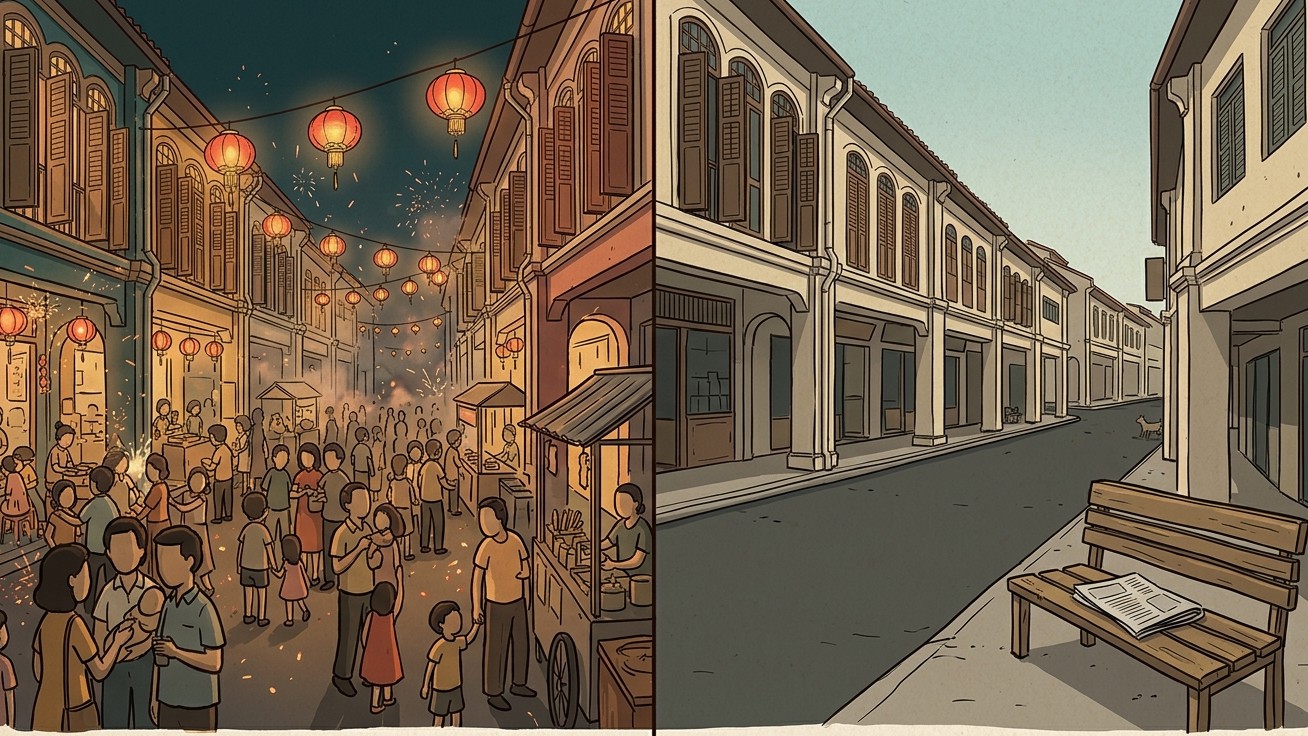
- Unfinished independence: in 1959 Singapore gained full internal self-government, but Britain retained control of defence and foreign affairs.
- The PAP's solution: merger with Malaya was seen as the way to end colonial rule and secure Singapore's economic survival.
- 16 September 1963: Singapore, Malaya, Sabah and Sarawak formed the Federation of Malaysia, greeted by the headline "Hail Malaysia!"
- 9 August 1965: deep economic and political disagreements led to separation, leaving Singapore to face an uncertain future alone.
Two Words You Need
- Federation: a group of states under one central government, where each state keeps some control over its own internal affairs.
- Sovereign nation: a nation that is not ruled or controlled by any other nation, as Singapore became after 9 August 1965.
Key People and Their Impact
- Tunku Abdul Rahman: Malaya's first Prime Minister, whose fear of a communist Singapore led him to propose Malaysia in 1961, and whose belief that disorder would spread led him to decide on separation in 1965.
- Lee Kuan Yew: Singapore's Prime Minister, who won the battle for merger and later championed a "Malaysian Malaysia", a campaign that deepened the rift with the Alliance.
- Goh Keng Swee and E. W. Barker: the ministers who secretly negotiated separation in July 1965; Barker drafted the Independence of Singapore Agreement and the Proclamation.
- Ong Eng Guan: an expelled PAP minister whose Hong Lim victory in 1961 exposed the party's split and pushed the Tunku towards merger.
- Lim Chin Siong and Dr Lee Siew Choh: leaders of the Barisan Sosialis, whose opposition to the merger terms forced the PAP to fight for public support.
- Othman Wok: PAP Minister for Social Affairs, branded an "anti-Malay tool" by critics, whose eyewitness account of the July 1964 riots remains a key source.
The Big Idea: Causation
- Causes: historical events result from the interaction of context, circumstances and the actions of people.
- Unintended consequences: actions can produce outcomes that their makers never planned.
- Why they arise: people cannot always foresee the results of their actions, control wider social, political and economic conditions, or predict how others will react.
- Applying it: weigh how far Singapore's separation from Malaysia was an unintended consequence of merger itself.
The Chapter's Questions
- Why did Singapore want to merge with Malaya?
- Why was there opposition to the merger?
- How did Singapore successfully pursue merger with Malaya?
- What led to Singapore's separation from Malaysia in 1965?
In One Sentence
- Singapore pursued independence through merger with Malaya and joined Malaysia in 1963, but deep disagreements ended the union in less than two years, and on 9 August 1965 Singapore became a sovereign nation.
Think About It
- In 1963, crowds celebrated merger with firecrackers. Why might something that began with so much hope end so quickly?
- Five territories were first proposed for the new federation, but only four joined in 1963. What might make a territory decide to stay out?
- Think of a time you did something with a good plan in mind but it turned out differently. What made the result different from what you intended?