How Did Tensions Turn Into Riots in 1964?
How Did Tensions Turn Into Riots in 1964?
In 1963 and 1964, disagreements between the two governments escalated into communal tension. These notes explain three reasons: election rivalry between the PAP and the Alliance, a campaign in the Malay press against the PAP, and calming efforts that fell short. Riots broke out on 21 July and 2 September 1964, after which community leaders worked together to restore harmony.
The Rivals
- The Singapore Alliance Party (SAP): formed in 1963 from the Singapore branches of UMNO, the MCA and the MIC together with the Singapore People's Alliance.
- Backed by Kuala Lumpur: supported by the Alliance Party, the SAP aimed to win seats in Singapore's Legislative Assembly.
- The PAP: Singapore's multiracial governing party, which promised a Malaysia not governed along racial lines.
How Did Tensions Turn Into Riots in 1964?
Reason 1: Election Rivalry
- PPointTensions rose because two elections turned the PAP and the Alliance into direct rivals.
- EEvidenceIn the September 1963 , the SAP won no seats, while the PAP won 37 of 51, including three Malay-majority areas. In the 1964 , the PAP contested nine seats, promising a Malaysia not governed along racial lines, and won one.
- EElaborationEach side felt the other had intruded on its ground: UMNO's loss of its Singapore seats and the PAP's entry into federal politics appeared to challenge the Alliance's position, so UMNO resolved to win back the Malay vote in Singapore.
- LLinkHence, electoral rivalry turned political disagreement into a contest for communal support.
Reason 2: A Campaign in the Press
- PPointTensions rose because a campaign in the Malay press stirred up anger against the PAP.
- EEvidenceSome UMNO leaders accused the PAP government of neglecting Malay interests, and the widely read Utusan Melayu alleged that it treated Singapore's Malays as second-class citizens and favoured Chinese education. On 12 July 1964, UMNO's Secretary-General, Syed Ja'afar Albar, gave a fiery anti-PAP speech in Singapore, and Othman Wok was depicted as an "anti-Malay tool".
- EElaborationRepeated , which were never proven, shaped how many readers saw the PAP government and heightened communal feeling, so that grievances against a political party became fears about the treatment of a whole community.
- LLinkThus, the press campaign raised tensions to a dangerous level.
Reason 3: Calming Efforts Fall Short
- PPointTensions remained high because efforts to calm them fell short.
- EEvidenceOn 19 July 1964, Lee Kuan Yew and Othman Wok met about 900 representatives of over a hundred Malay organisations, promising help in education, jobs and housing and stressing equal rights for all. Yet Utusan Melayu continued to print articles accusing the PAP.
- EElaborationA single meeting could not undo months of hostile reporting, and with the allegations still circulating, distrust persisted.
- LLinkTherefore, tensions remained dangerously high, and two days later, on 21 July 1964, riots broke out.
The 1964 Riots
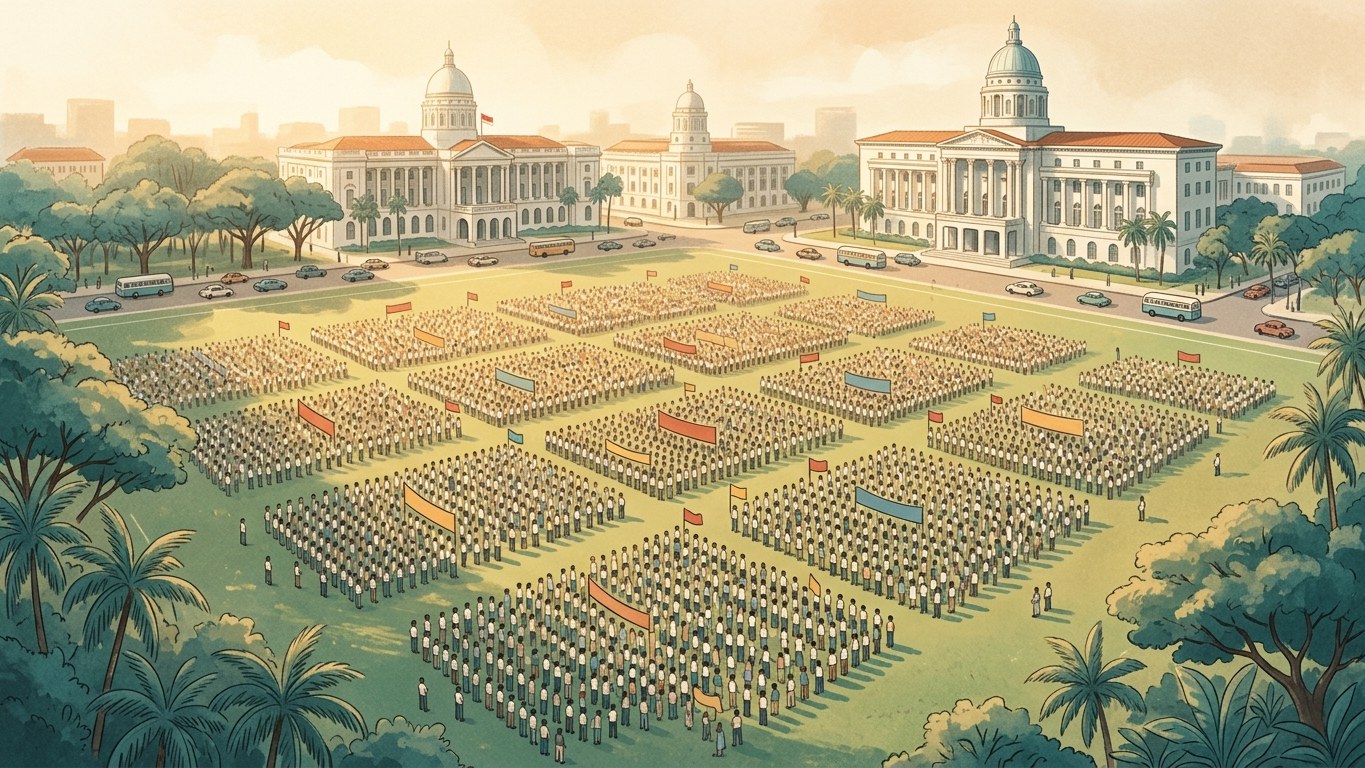
- 21 July 1964: about 20,000 Muslims gathered at the Padang to mark Prophet Muhammad's birthday; violence erupted during the procession that followed, leaving 23 dead and 454 injured, and an island-wide was imposed.
- Contested accounts: leaders on each side gave different accounts of how the violence began, and no single community is to blame.
- 2 September 1964: violence erupted again after a trishaw rider was killed, leaving 13 dead and 106 injured and showing that communal tensions had become entrenched rather than isolated.
Restoring Harmony
- Goodwill Committees: community leaders of different races worked together to calm tensions and rebuild trust, laying foundations for racial harmony.
- A two-year truce: after the September riots, the PAP and the Alliance agreed not to raise racial issues or to contest each other's elections for two years.
Reading Eyewitness Accounts
- Eyewitnesses: people who experienced or saw an event; their accounts give first-hand information, but their reliability must be checked.
- Two views of 21 July: Othman Wok, a PAP minister leading a group in the procession, and Seah Chiang Nee, a news reporter driving into Geylang, saw different parts of the same day.
- Claim, Support, Question: what does the account claim, what else supports it, and what more must be asked to check it?
- Also ask: who was the witness, and was the account recorded soon after the event or many years later?
In One Sentence
- Election rivalry, a press campaign against the PAP and calming efforts that fell short turned political disagreements into communal tension, which erupted into riots in July and September 1964.
Think About It
- Newspapers printed allegations that were never proven. How can what people read shape the way they feel about other communities?
- Othman Wok and Seah Chiang Nee both saw 21 July 1964 but described it differently. Why can two honest tell different stories?
- After the riots, leaders from different races formed . Why might community leaders sometimes calm tensions better than politicians?