Why Did the British Have to Defend Malaya Too?
Why Did the British Have to Defend Malaya Too?
For the Singapore strategy to work, the naval base had to hold out until the fleet arrived. These notes explain how British thinking changed: at first they believed no enemy could attack from the north; by the 1930s they realised an attack down Malaya was possible; and because Johor lay so close, Singapore could not be held if Malaya fell. As a result, the British had to plan to defend Malaya too.
Why Malaya Mattered
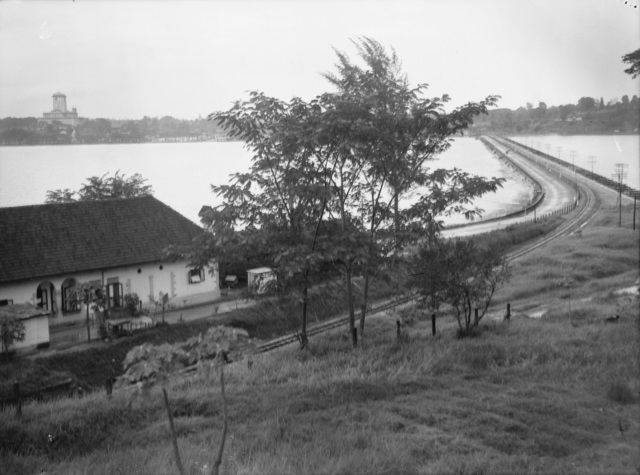
- Hold out: the naval base had to be defended until the British fleet arrived.
- Linked: the British came to realise that defending Singapore depended on defending Malaya.
- The Causeway: finished in 1924, it linked Johor and Singapore across the narrow .
Why Did the British Have to Defend Malaya Too?
Belief 1: "No One Can Come from the North"
- PPointAt first, the British believed Singapore could not be attacked from the north.
- EEvidenceIt seemed too difficult to land troops in Malaya during the , and any army would have had to fight through thick jungle.
- EElaborationBecause Malaya's weather and jungle seemed to be a natural barrier, the British saw the sea as the only real threat, so they built their defences to face attacks from the south and east.
- LLinkHence, the north coast was left lacking defences, a weakness the Japanese would later exploit.
Change: "Actually, They Can"
- PPointBy the 1930s, British commanders in Malaya realised that an attack from the north was possible.
- EEvidenceWith better equipment, troops could land even in the wet and windy monsoon. New roads and railways now ran down the Malayan peninsula.
- EElaborationThese changes removed both natural barriers: the weather no longer stopped landings, and an army could advance quickly along roads and railways instead of cutting through the jungle.
- LLinkThus, the British could no longer rely on the monsoon and the jungle to protect Singapore from the north.
Reason: So Close to Johor
- PPointThe British had to defend Malaya because Singapore could not be held if Malaya fell.
- EEvidenceThe Straits of Johor are only about 1.6 to 4.8 kilometres wide. From Johor, an enemy could bomb and shell the naval base without landing in Singapore.
- EElaborationAn enemy in Johor could put the naval base out of action long before the fleet arrived, so the base could not hold out for as long as the strategy required.
- LLinkTherefore, defending Singapore depended on defending Malaya, which greatly increased the forces Britain needed in the region.
The British Plan
- Stop the landing: the British drew up plans to stop an enemy army from landing in northern Malaya.
- Airfields: military airfields were built in many parts of Malaya, as bases for planes to defend it.
- Deter: the British hoped this would make enemies think twice about invading.
- A plan not used: a plan to occupy southern Thailand, to stop Japanese landings there, was not carried out because the British feared offending the Thai government; the Japanese later landed there.
- The catch: these plans needed planes, ships and soldiers that Britain, at war in Europe, could not spare (Video 5).
In One Sentence
- Once the British realised that an enemy could come down Malaya and shell the naval base from Johor, they had to defend Malaya too, which needed far more forces than they had.
Think About It
- Why do you think the British first believed the jungle and the monsoon would protect Singapore?
- The Straits of Johor are only 1.6 to 4.8 kilometres wide. Why did that make defending Malaya so important?
- The British chose not to occupy southern Thailand, a neutral country. Was that a sensible choice at the time? Why or why not?