How Fairly Did the British Treat the Asians Who Helped Build Their Colony?
How Fairly Did the British Treat the Asians Who Helped Build Their Colony?
Some local people helped make laws, but the British did not treat Asians as equals, because they believed British culture was and that it was their job to "civilise" the people they ruled. These notes explain three ways this belief affected Asians: top jobs were kept for the British, Europeans enjoyed privileges, and Asians in the Legislative Council could be and overruled. This limited the role the people could play.
What the British Believed
- Superior: the British believed their culture was better than others.
- "Civilising": they thought it was their job to change the people they ruled to be more like them. The quotation marks show this was the British view.
- The impact: this belief in British superiority shaped how Singapore was run and led to against Asians.
How Fairly Did the British Treat the Asians Who Helped Build Their Colony?
Way 1: Top Jobs for the British
- PPointOne way Asians were not treated as equals was that senior government jobs were kept for the British.
- EEvidenceMost high-ranking officials in the colonial government were British, and even well-qualified locals were not given important positions.
- EElaborationHowever skilled an Asian was, he could not rise to the top, so locals were shut out of the decisions that shaped the colony they helped to build.
- LLinkHence, the British practised discrimination, treating people unfairly because of who they were.
Way 2: Privileges for Europeans
- PPointAnother way Asians were not treated as equals was that Europeans enjoyed privileges denied to Asians.
- EEvidenceFrancis Thomas, a British teacher at St Andrew's School in the 1930s, was told that calling the senior Chinese teacher Mr Tan Ah Hung "Sir" embarrassed him. Thomas's starting pay of $400 was far higher than Mr Tan's, even after Mr Tan's many years of service. Asians were also discouraged from first-class train carriages, and some hotel dance floors and bars were for Europeans only.
- EElaborationPay and treatment depended on race rather than ability, as Thomas himself wrote that skin colour, not skill, decided a person's pay, so Asians were made second-class in the city they helped build.
- LLinkThus, Europeans were given privileges that Asians were denied, however much Asians contributed.
Way 3: Outvoted and Overruled
- PPointA third way Asians were not treated as equals was that the British kept control of law-making.
- EEvidenceFor years Asian members of the Legislative Council were outvoted by European officials, and equal numbers came only in 1924. Dr Lim Boon Keng's proposal to ban opium was rejected because opium earned the government a great deal of money.
- EElaborationAsian members could speak up and propose laws, but they could not get a law passed when it threatened government income, so real power stayed with the British.
- LLinkTherefore, even in government Asians were never fully equal, which limited how far the people could shape Singapore's development.
Reading Francis Thomas's Account
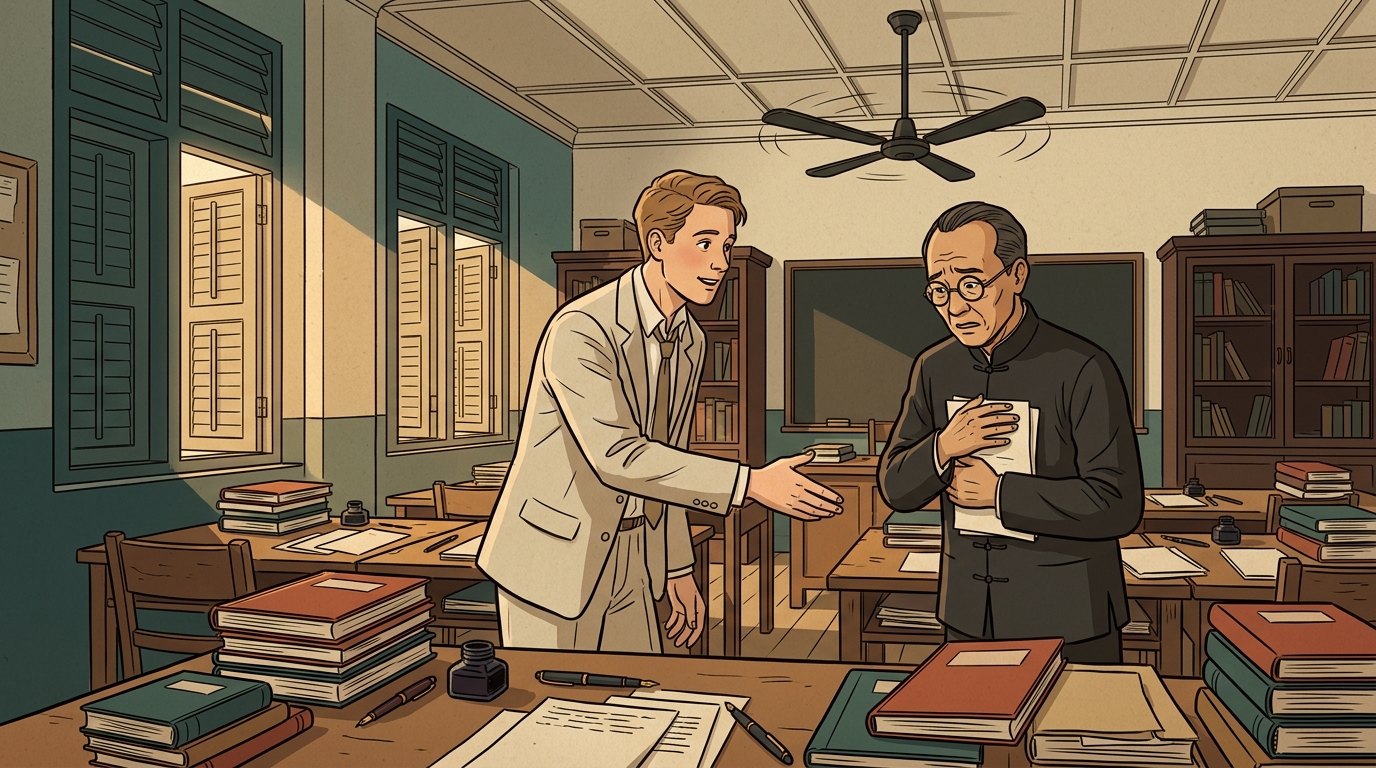
- Who wrote it: a British teacher at St Andrew's School in the 1930s.
- What he noticed: calling an Asian colleague "Sir" was seen as embarrassing in the world they lived in.
- His conclusion: pay depended on skin colour, not on how good someone was at the job.
- Why it matters: the writer gained from the system, so his criticism of it is especially telling.
In One Sentence
- Because the British believed their culture was superior, Asians were kept out of top jobs, denied the privileges Europeans enjoyed and outvoted in making laws, so they were never treated as equals.
Think About It
- Mr Tan was embarrassed when a European called him "Sir". What does that tell you about how people saw themselves in colonial Singapore?
- Asians helped build Singapore, yet were treated as second-class. How might that have made them feel about British rule over time?
- Which of the three ways do you think was the most unfair, and why?