What Backbreaking Jobs Did Migrant Labourers and Craftsmen Do?
What Backbreaking Jobs Did Migrant Labourers and Craftsmen Do?
Labourers were one of the largest groups of migrants, and their hard, poorly paid work built Singapore. These notes cover , , Indian and Indian labourers, and Bugis , and explain how their role in building the settlement made the port work. They also show a skill for reading pictures: See, Think, Wonder.
Coolies
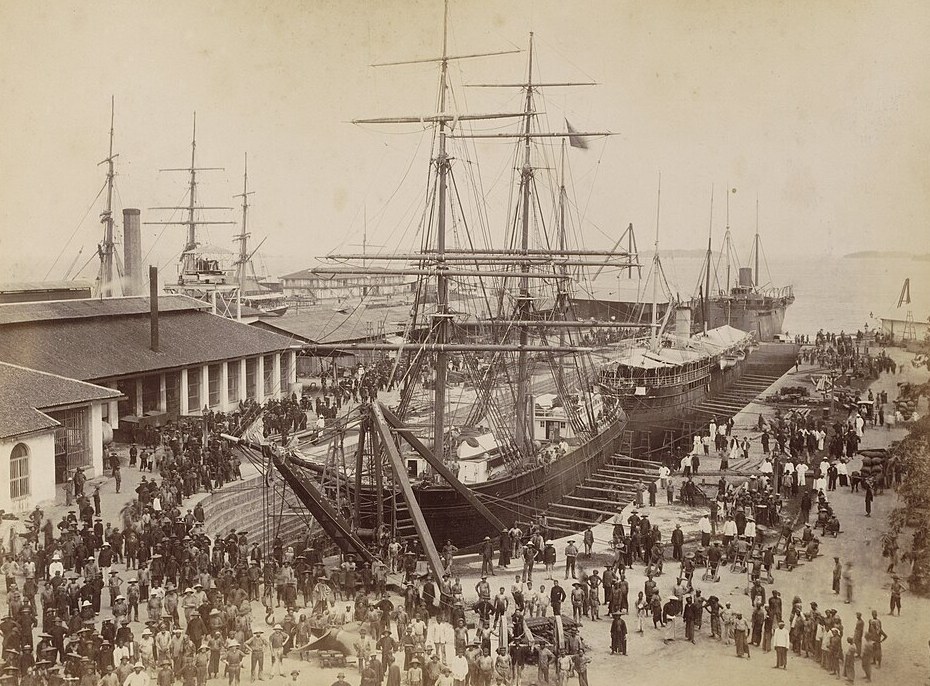
- Who: many were Chinese men who came in the second half of the 1800s. Some had signed contracts for a job before they even left home.
- At the port: they loaded and unloaded goods and carried them between boats and warehouses along the river, keeping trade moving.
- Indian labourers: many came, especially from 1867 to 1941, to work on plantations and build roads, railways and harbour facilities.
- Rickshaw pullers: they pulled hundreds of kilograms a day for about 30 to 40 cents, so many took second jobs.
Samsui Women
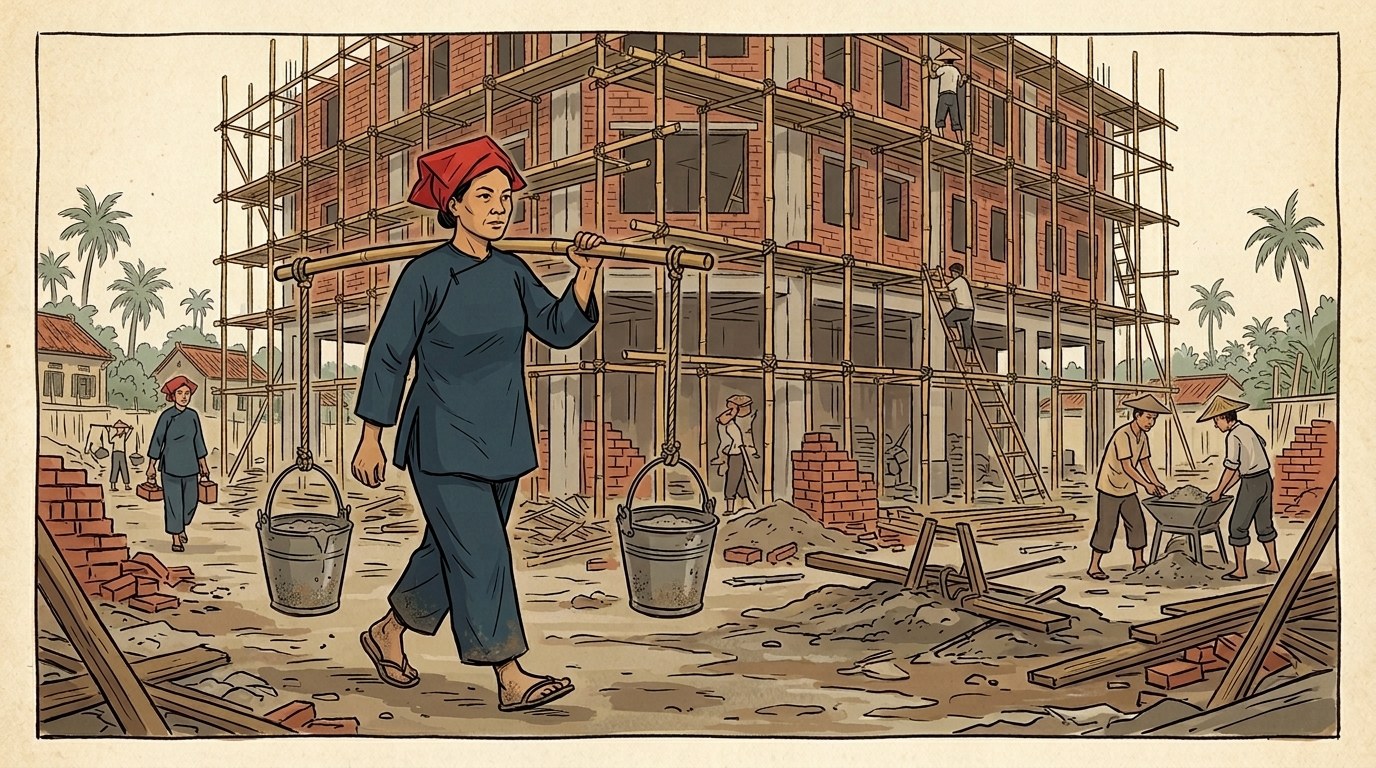
- When: from the 1930s, women in red headdresses were a common sight on building sites, carrying heavy pails of cement on a pole.
- Where from: many came from the Sanshui district in Guangdong, China (Samsui in Cantonese).
- The red headdress: it was eye-catching, so there were fewer accidents, and it kept dust and dirt out of their hair.
Convict Labourers
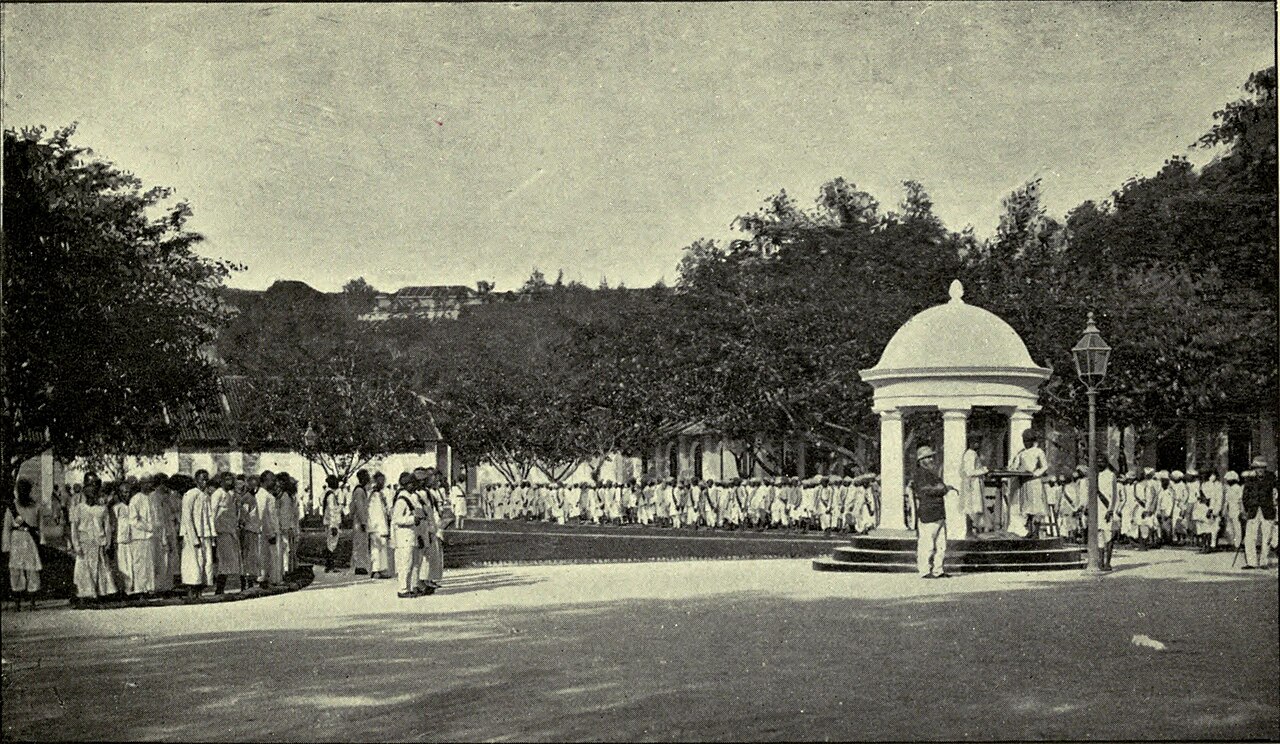
- When: from 1825 to 1873, the main source of labour for was Indian convicts brought over by the British.
- Their work: they cleared jungle, swept streets, laid the first roads, tended gardens and put up buildings.
- What they built: High Street, Singapore's first street, and St Andrew's Church, today St Andrew's Cathedral.
- Bawajee Rajaram: a convict from Bombay who drew plans for public buildings such as St Andrew's.
Craftsmen
- Boatbuilders: the Bugis were skilled at building ships and boats.
- Their boats: Malay traders used them to carry goods to nearby islands, extending Singapore's regional trade.
- On the river: Bugis trading ships, like the , sailed right up the Singapore River.
Skill: See, Think, Wonder
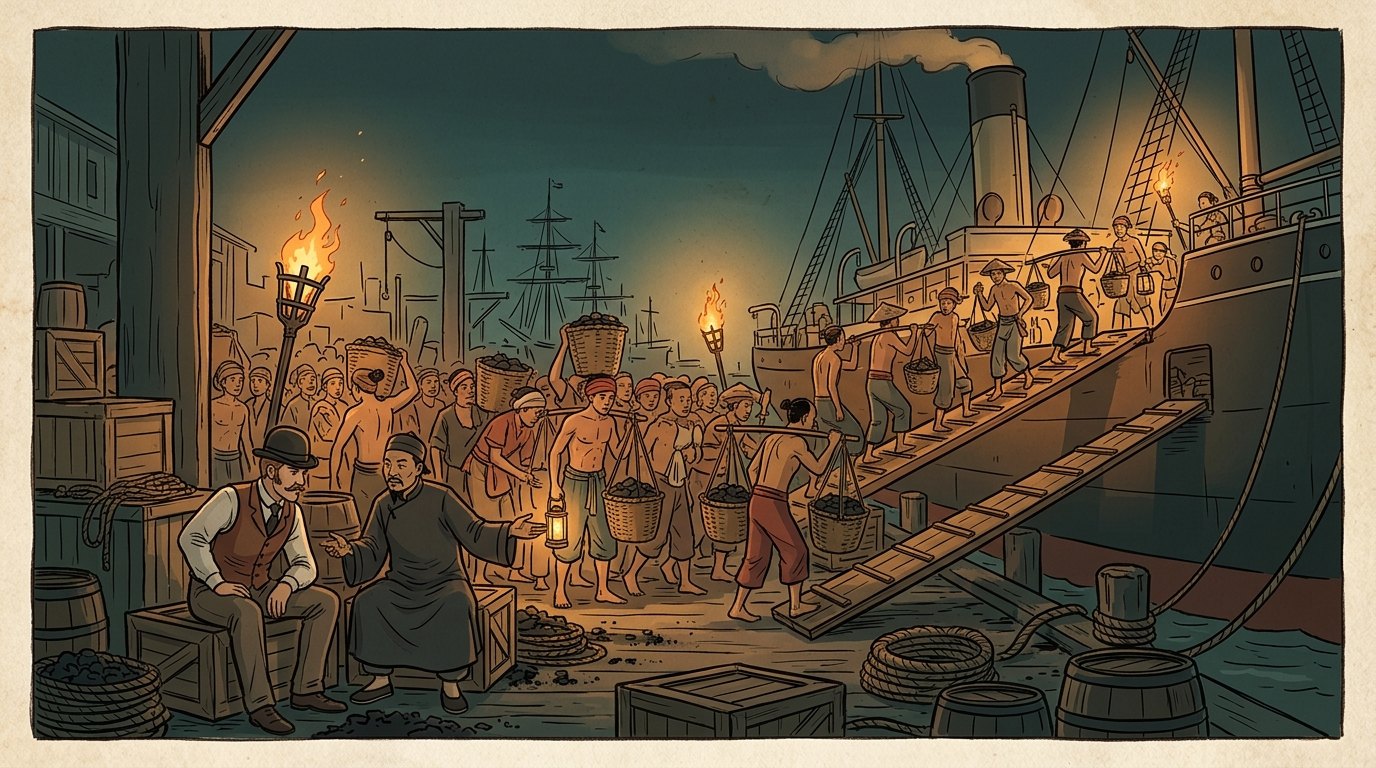
- See: what is actually there? Many labourers working at night, with two men sitting and watching.
- Think: what is going on? Cramped, hard work, closely watched to finish on time.
- Wonder: what questions does it raise? Why at night? How were they paid? Was every labourer's life like this?
What Backbreaking Jobs Did Migrant Labourers and Craftsmen Do?
Role: Building the Settlement
- PPointOne role the people played in Singapore's development as a port city was building the settlement.
- EEvidenceCoolies loaded and unloaded ships and coaled steamships. From 1825 to 1873, Indian convicts cleared jungle and built the first roads, High Street and St Andrew's Church, to plans by Bawajee Rajaram. Indian labourers built roads, railways and harbour facilities, Samsui women carried cement on building sites from the 1930s, and Bugis craftsmen built boats.
- EElaborationTheir cheap, hard labour serviced the ships, moved goods between boats and warehouses, and built the roads, docks and buildings a port needs, so without it ships could not be handled and trade would have stalled.
- LLinkTherefore, labourers and craftsmen were vital to Singapore's growth as a port city, even though most of their names went unrecorded.
In One Sentence
- Coolies, Samsui women, convict and Indian labourers and Bugis craftsmen did the hard, poorly paid work of building the settlement, without which Singapore could not have worked as a port city.
Think About It
- Labourers built much of Singapore, but most of their names are not remembered. Why do you think that is?
- Compare a coolie's life with a rich trader's. How were their experiences of Singapore different?
- Look at an old photo of workers. Using See, Think, Wonder, what questions would you ask about it?