Why Did So Many People Die, and How Did Life Go On?
Why Did So Many People Die, and How Did Life Go On?
Between 1942 and 1945, 130,000 deaths were officially recorded in Singapore, more than double the number recorded between 1937 and 1940. These notes examine three reasons the death toll soared (disease, the treatment of prisoners and forced labourers, and failed resettlement schemes) and consider how continued, partly as propaganda, even amid such hardship.
Reason 1: Disease
- Pre-war neglect: healthcare and sanitation had never been a priority for the colonial authorities.
- Deteriorating conditions: during the Occupation, healthcare and sanitation worsened further.
- Medical shortages: medicine and medical supplies were scarce, so many treatable illnesses went untreated.
- Malnutrition: food shortages left people weakened and vulnerable to (caused by a lack of vitamin B1), pneumonia (a lung infection) and dysentery (an illness of the gut).
- The scale: recorded deaths more than doubled, to 130,000 between 1942 and 1945.
Reason 2: Prisoners and Forced Labour
- Overcrowding: Changi Prison, built for 600 prisoners, held up to 5,000; with little food, medicine or hygiene, disease spread rapidly.
- Forced labour: were made to clear war damage, bury the dead and build Japanese memorial shrines.
- The Death Railway: from May 1942, many POWs were sent to build the Siam–Burma Railway, where about 16,000 perished from exhaustion, starvation and disease.
- Local labourers: local people were also forced to work on the railway with only simple tools, little food and almost no medical care, and many died.
Reason 3: Failed Resettlement
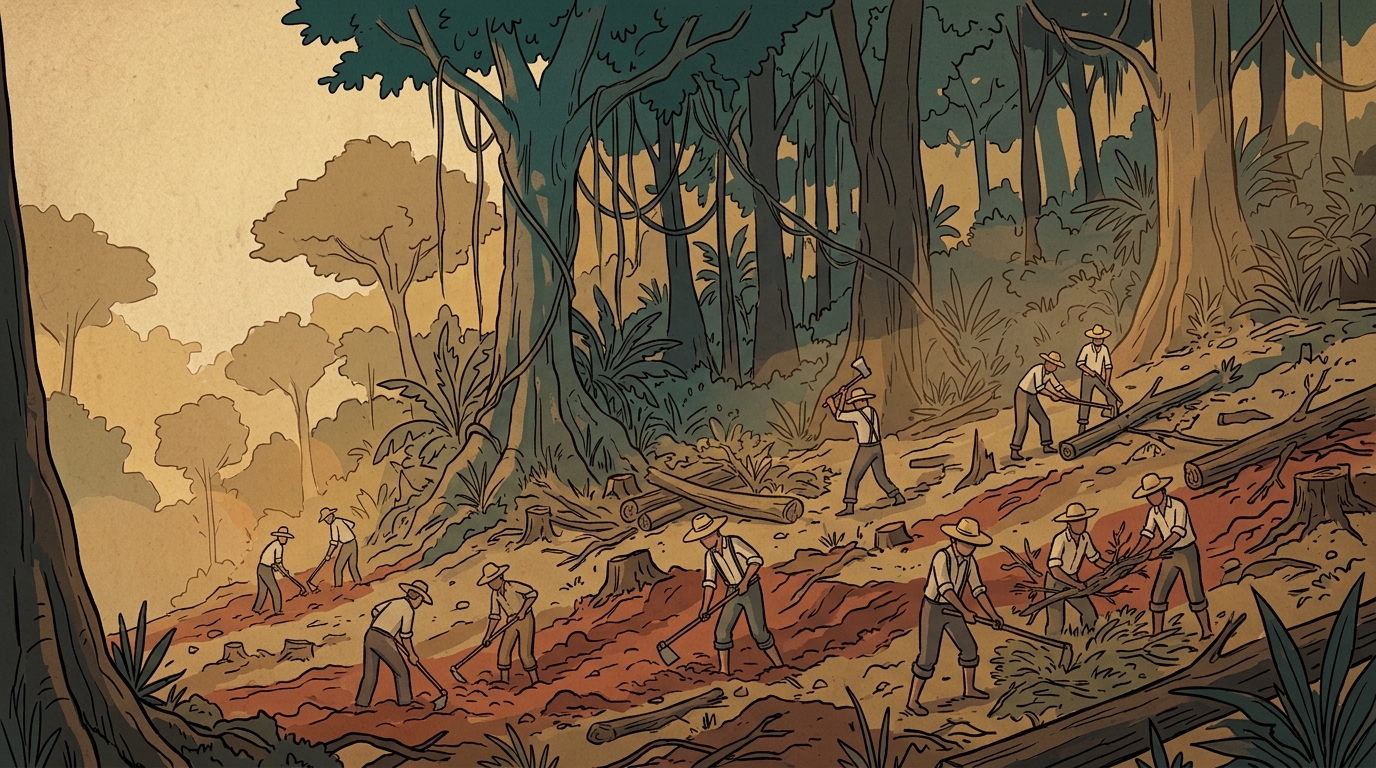
- Why relocate people: growing food in Singapore had not eased the shortage, so the Japanese relocated civilians to farming settlements, overseen by the official Mamoru Shinozaki.
- Endau, Johor: settled mainly by Chinese, it initially prospered thanks to fertile soil and plentiful water, with street lights, a hospital and shops, but was later raided by bandits and anti-Japanese .
- Bahau, Negeri Sembilan: set up for Eurasians and Chinese Roman Catholics, it failed because the land was hilly and infertile and malaria kept recurring; many settlers died.
Life Goes On: Leisure as Propaganda
- Why allow leisure: the Japanese wanted to project an image of a happy, harmonious society under their rule.
- Radio and films: programmes featured Japanese songs, Malay music and news in Hokkien and Cantonese; cinemas showed Japanese films, and free open-air propaganda screenings were held.
- Sport and music: football, baseball, tennis and badminton matches were reported almost daily, and the police band played at the Botanic Gardens.
- Behind the wire: POWs sustained morale through a camp newspaper, plays, church services and murals in Changi Chapel, while civilian prisoner William Haxworth secretly produced over 300 sketches of camp life.
In One Sentence
- Disease worsened by malnutrition and medical shortages, the brutal treatment of prisoners and forced labourers, and failed resettlement schemes caused the death toll to soar, even as leisure continued partly as propaganda.
Think About It
- Many deaths came from disease, not fighting. How were hunger and disease linked during the Occupation?
- Endau was called a great success, but Bahau was not. Why might the Japanese have wanted people to hear about Endau and not Bahau?
- Why do you think prisoners bothered to put on plays and paint murals when they were short of food and medicine?