How Did a Changing World Shape People's Views of British Rule?
How Did a Changing World Shape People's Views of British Rule?
Between 1945 and 1954, developments beyond Singapore transformed both how people viewed British rule and how the British governed. These notes examine three outside forces (the weakening of colonial rule, the spread of amid the , and a fuelled by nationalism) and explain why, together, they compelled the British to win support rather than simply reimpose control.
A World on the Move
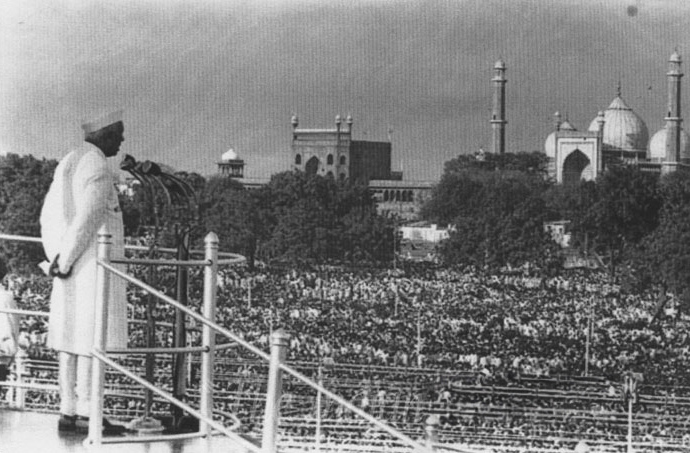
- The backdrop: changes in Singapore after the war took place against major developments abroad.
- Why they matter: they shaped how people responded to British rule, and how the British themselves thought and acted.
- Three forces: the weakening of colonial rule, the spread of communism, and a political awakening.
How Did a Changing World Shape People's Views of British Rule?
Colonial Rule Weakening
- PPointThe weakening of colonial rule across Asia encouraged people in Singapore to believe that British rule could be ended.
- EEvidenceThe war left the European powers economically and financially weakened. India won independence from Britain in 1947 and Burma (now Myanmar) in 1948, Indonesia broke free from the Dutch in 1949, and in 1954 the Vietnamese overthrew the French, in movements led by figures such as Gandhi, Sukarno and Ho Chi Minh.
- EElaborationThis wave of decolonisation showed that even powerful empires could be forced to give up their colonies. As news of these successes spread, people in Singapore who had long resented colonial rule gained confidence that they, too, could govern themselves.
- LLinkHence, the weakening of colonial rule abroad made people in Singapore increasingly unwilling to accept British rule.
Two Ideologies: The Cold War
- The Cold War: after 1945, rivalry grew between the United States and the Soviet Union, without open war between them.
- Political power: the United States upheld free elections with several parties, whereas the Soviet Union allowed only the Communist Party.
- The economy: in the United States people could own businesses; in the Soviet Union the state controlled factories and farms.
- Rights: the United States prioritised individual freedom, while the Soviet Union put the interests of society first.
- Why it mattered here: communism versus shaped how the British viewed every challenge to their rule in Malaya and Singapore.
The Spread of Communism
- PPointThe spread of communism, amid the Cold War, both fuelled feeling in Singapore and made the British more determined to keep control.
- EEvidenceThe Malayan Communist Party (MCP), which opposed colonial rule, worked through trade unions and Chinese-medium schools to stir up anti-colonial feeling. After three European rubber planters were murdered in Malaya in June 1948, the British declared a State of Emergency and banned the MCP a month later. In 1949, the Communist Party of China, led by Mao Zedong, won the Chinese Civil War.
- EElaborationBecause communism offered an alternative to colonial rule, it attracted support among workers and students. With so many Chinese immigrants in Malaya and Singapore, the communist victory in China heightened British fears that communist ideas would take root locally.
- LLinkThus, the spread of communism shaped both how people responded to British rule and how cautiously the British handled Singapore for years.
A Political Awakening
- PPointThe war triggered a political awakening, as nationalism grew and many people made independence their goal.
- EEvidenceBritain's rapid defeat in Malaya and Singapore destroyed its prestige: people had seen European prisoners doing manual labour, and locals had filled senior posts during the Occupation. One Singaporean recalled that harsh Japanese rule, the defeat of the "all-powerful" Europeans by Asians, and struggles for freedom in India and China convinced him that "the target was independence".
- EElaborationThese experiences shattered the myth of European superiority and gave locals the confidence that they could govern themselves. The British, however, underestimated this change and planned to resume control as before, which provoked fierce resistance.
- LLinkTherefore, the political awakening forced the British to abandon simply reimposing control and to try to win people's support instead.
In One Sentence
- Decolonisation across Asia, the spread of communism amid the Cold War, and a nationalist awakening made people in Singapore want to rule themselves, compelling the British to win support rather than simply reimpose control.
Think About It
- India, Indonesia and Vietnam were far away. Why might their independence have mattered so much to people in Singapore?
- Communism attacked colonial rule. Why might some people in Singapore have found it attractive, and why did it worry the British so much?
- Which of the three forces do you think was most important in changing how people saw British rule? Give a reason.