What Led to Self-Government, and Who Are the Key Figures?
What Led to Self-Government, and Who Are the Key Figures?
The British returned in September 1945 to a population that welcomed them, yet no longer accepted their rule unquestioningly: the swift fall of the "impregnable fortress" and three and a half years of hardship had shaken faith in British protection. These notes trace the road from 1945 to full internal in 1959, introduce the people who shaped it, and set out the chapter's central concept: .
Why it matters
Having watched the "impregnable fortress" fall and lived through three and a half years of hardship, people no longer saw the British the same way. This was significant because many began to question whether Britain had the right to rule.
Why it matters
The rivalry between democracy and communism made the British fear that communism would spread to Malaya and Singapore. As a result, fear of communism shaped how the British treated Singapore for years.
Why it matters
The British Military Administration had struggled to fix food shortages, economic difficulties and disrupted schooling. Its slow progress contributed to growing discontent with British rule.
Why it matters
This showed that rule was weakening across Asia. News of India's independence encouraged people in Singapore who wanted to be free from British rule.
Why it matters
The Emergency, which lasted until 1960, showed how seriously the British feared communism. The Malayan Communist Party was banned, and fear of communism continued to shape British decisions about Singapore.
Why it matters
This marked a first step towards democracy, but only a small one. Few people registered or were allowed to vote, so the British remained firmly in control.
Why it matters
Indonesia's independence was further evidence that colonial rule was ending in Asia, while the Communist victory in China increased British fears that communism would spread.
Why it matters
This was the first of four big riots in six years. Historians see it as an expression of anti-colonial feeling, as many felt the British had been unfair, and it showed how religious feelings could quickly turn violent.
Why it matters
Only a small number of seats were elected again, and the response was lukewarm. This showed that most people still had little say in how Singapore was governed.
Why it matters
The commission recommended limited self-government, which led to the 1955 Rendel Constitution. This marked an important step on the road to self-government.
Why it matters
Chinese-medium students protested against National Service, which they saw as serving colonial rule. When registration was postponed, the students grew more confident and formed groups like the SCMSSU.
Why it matters
The Vietnamese overthrow of their French rulers was further evidence that colonial rule was ending in Asia, which encouraged anti-colonial feeling in Singapore.
Why it matters
David Marshall became the first Chief Minister, showing support for parties that wanted to end British rule quickly. However, the riots made his government look weak to the British, which contributed to the failure of the First Talks.
Why it matters
The failure of the talks led Marshall to resign. Lim Yew Hock then acted firmly against the students, which pleased the British but led some locals to see his government as "running dogs" of the British.
Why it matters
Singapore's neighbour won its independence, further showing that colonial rule was ending in the region.
Why it matters
Because Lim Yew Hock compromised on internal security, the talks succeeded. The Citizenship Ordinance let about 320,000 residents become citizens, greatly expanding the number who could vote in 1959.
Why it matters
This marked the achievement of full internal self-government: Singapore now ran its own affairs at home. However, Britain still controlled foreign affairs and defence, so Singapore was not yet independent.
A Changed Singapore
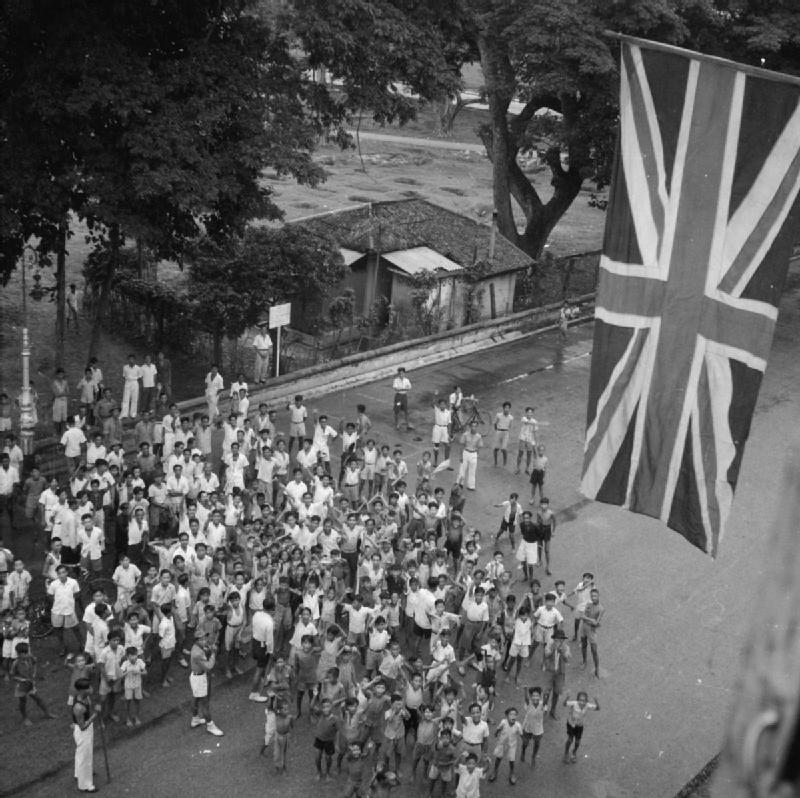
- Relief: people greeted the end of the war and the return of the British with joy.
- Eroded confidence: the swift fall of Singapore and the hardship of the Occupation led many to question Britain's right to rule.
- The wider world: decolonisation, the spread of communism and rising nationalism across Asia reshaped how people viewed colonial rule.
The Road to 1959
- Outside forces: weakening colonial rule, the spread of communism and a political awakening made people want to rule themselves.
- British efforts: the British tried to win support by tackling housing, food and industrial unrest, and by introducing a limited election in 1948.
- Local responses: discontent erupted in riots and protests in the 1950s, while new parties and leaders pressed for self-rule.
- Constitutional change: the Rendel Constitution of 1955 and the Merdeka Talks of 1956 and 1957 steadily transferred power to locals.
- The goal reached: in 1959 Singapore won full internal self-government, the right to run its own affairs at home.
Key People and Their Impact
- David Marshall: the first Chief Minister, whose failure at the 1956 Merdeka Talks and principled resignation exposed the limits of British willingness to grant self-government.
- Lim Yew Hock: the second Chief Minister, whose crackdown on communism won British trust and the 1957 compromise, but cost his party local support and the 1959 election.
- Lee Kuan Yew: co-founder of the People's Action Party (PAP), who became the first Prime Minister after its 1959 landslide.
- Yusof bin Ishak: a journalist who became the first local Head of State in 1959 and later Singapore's first President.
- C.C. Tan: leader of the Singapore Progressive Party (SPP), whose gradual, pro-British approach was overtaken by demands for immediate independence.
- Lim Chin Siong and Devan Nair: union leaders who mobilised workers and were detained by the British for their activities.
The Big Idea: Historical Significance
- Meaning: historians judge how important, or significant, an event or development was.
- Not fixed: significance depends on who is judging and the criteria they apply.
- Test 1: did it result in change, with far-reaching consequences for society?
- Test 2: is it remembered, so that it was, or still is, memorable for a group of people?
- Applying it: weigh each event in this chapter against both tests before deciding how significant it was.
The Chapter's Questions
- How did events outside Singapore after the war affect Singapore?
- How did the British deal with post-war problems in Singapore?
- How did the locals respond to British rule in the post-war period?
- How did Singapore finally get full internal self-government in 1959?
In One Sentence
- After World War II, people in Singapore no longer accepted British rule unquestioningly, and between 1945 and 1959 elections, new parties, protests and riots pushed the British to concede full internal self-government.
Think About It
- People cheered when the British returned in 1945, yet many soon questioned their right to rule. How can both be true at the same time?
- Look at the timeline. Which event do you think changed people's minds about British rule the most, and why?
- Pick one event from the timeline. Use the two tests of significance: did it result in change, and is it remembered?