Why Did Students Riot Against National Service in 1954?
Why Did Students Riot Against National Service in 1954?
In 1953 the British required all males aged 18 to 20 to register for National Service by May 1954. On 13 May 1954, about 500 students from marched in protest. These notes explain three reasons for their opposition, how the protests unfolded, and why they politicised a generation of Chinese-educated youth and deepened British fears of communist subversion.
The National Service Law
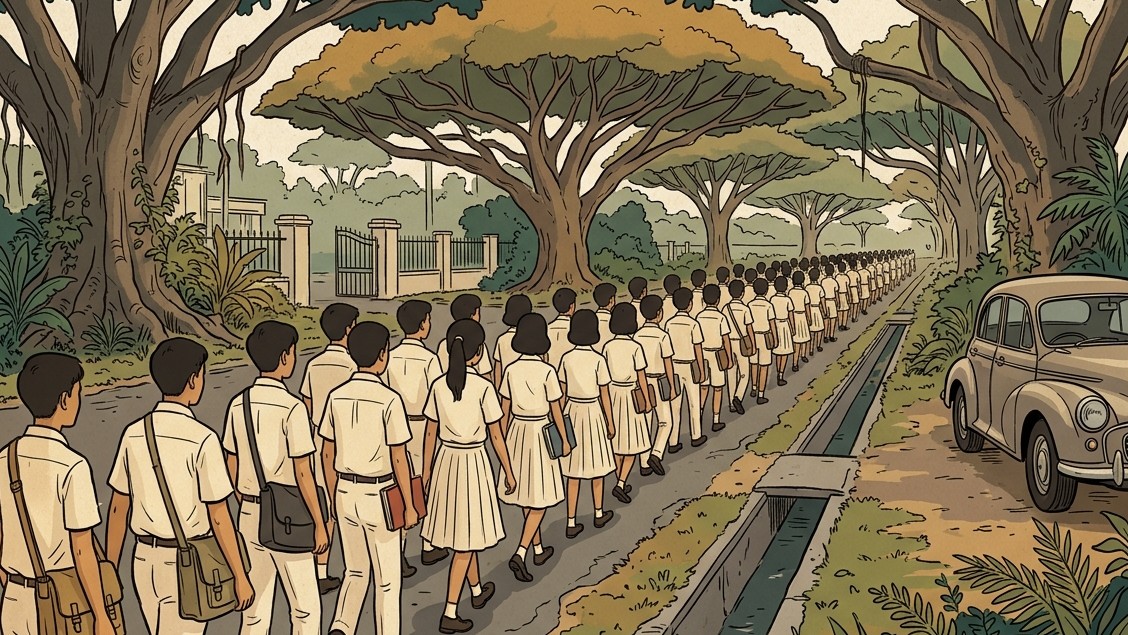
- The British aim: to share the duty of defence more evenly across the population, made more urgent by the Emergency.
- The law: the (1953) required all males aged 18 to 20 to register by May 1954, on pain of a fine or jail.
- Anti-colonial feeling: like the Maria Hertogh riots, the protests that followed expressed resentment of colonial rule.
Why Did Students Riot Against National Service in 1954?
Reason 1: Disrupted Studies
- PPointThe students opposed National Service because it would interrupt their education once again.
- EEvidenceThe Occupation had already halted schooling for three and a half years, so many Chinese-medium secondary students were older than usual and now fell within the 18 to 20 age range.
- EElaborationHaving already lost years of study to the war, these students saw the law as disregarding their wartime losses and threatening to delay their education further, so their grievance was personal and keenly felt.
- LLinkHence, the threat of further disruption to their studies made many students determined to resist National Service.
Reason 2: Discrimination
- PPointThe students opposed National Service because they believed the British discriminated against Chinese education.
- EEvidenceIn 1950, 80% of the government's education budget went to English-medium schools and just 6% to Chinese-medium schools. The 1950 School Registration Ordinance tightened control over schools, and plans for an English-based national school system were under way.
- EElaborationThese measures convinced the students that the British saw Chinese education as inferior and intended to sideline it. Being asked to serve a government that undermined their schools therefore seemed deeply unjust.
- LLinkThus, resentment of unequal treatment turned the National Service law into a symbol of British unfairness towards the Chinese-educated.
Reason 3: A Foreign Government
- PPointThe students opposed National Service because they refused to defend a government they regarded as foreign.
- EEvidenceTo many Chinese-educated students, the British were colonial rulers who gave their community little in return, while defence was something they would be compelled to provide under threat of punishment.
- EElaborationBecause they felt no loyalty to the colonial government, being made to risk their lives for it seemed to serve British interests rather than their own, which fuelled anti-colonial sentiment.
- LLinkTherefore, National Service was opposed as a demand to serve colonial rule.
What Happened Next
- 13 May 1954: riot police were sent to disperse about 500 marching students, and the peaceful turned violent, leaving 26 injured.
- Schools closed: the British closed all Chinese-medium schools the next day, which only intensified the unrest.
- 22 May: thousands of students occupied Chung Cheng High School, holding their own lessons and going on a hunger strike.
- Registration postponed: the British backed down and postponed National Service registration.
- Politicised youth: emboldened students formed the , and many in the Chinese community sympathised with them.
- Communist influence: the British believed the Malayan Communist Party was encouraging the students, so the protests deepened their fears of subversion in Chinese schools.
In One Sentence
- Chinese-medium students resisted National Service in 1954 because it disrupted their studies again, their schools faced discrimination, and they refused to defend a foreign government; the protests forced a postponement and politicised a generation.
Think About It
- Only 6% of the education budget went to Chinese-medium schools. How might that one number have shaped the students' feelings about serving the British?
- The British postponed registration after the protests. Did the students win? What else changed because of the protests?
- Singapore brought in National Service again in 1967 and it was accepted. What was different about who was asking people to serve?