Why Did the Maria Hertogh Riots Happen?
Why Did the Maria Hertogh Riots Happen?
Despite British efforts, discontent persisted, and in December 1950 a case over a 13-year-old girl, Maria Hertogh, erupted into three days of riots. These notes explain how reporting turned the case into a religious issue, why many saw the verdict as British bias, and the lasting lessons the riots hold for a multiracial, multi-religious society.
The Background
- Separated by war: Maria, born in Java in 1937 to Dutch Catholic parents, was left during the Occupation in the care of a family friend, Che Aminah.
- A new identity: renamed Nadra, she was raised as a Muslim and later moved with her foster family to Malaya.
- The custody ruling: in 1950 her mother went to court in Singapore, and a British judge ruled that Maria should return to her birth parents.
- The appeal: while it was heard, Maria was placed in a Catholic convent, a decision that inflamed Muslim feeling.
Why Did the Maria Hertogh Riots Happen?
Why the Case Turned Into Riots
- PPointThe custody case erupted into riots because it was portrayed as a religious issue and the verdict was seen as British bias.
- EEvidenceDuring the , some newspapers published sensationalised reports and photographs of Maria's life in the convent, presenting the case as a clash between Islam and Christianity. On 11 December 1950, the judge rejected Che Aminah's appeal.
- EElaborationBy framing a family dispute as an attack on Islam, the reports convinced many Muslims that their religion was being disrespected. When the appeal failed, the ruling appeared to confirm that the British courts favoured the Dutch, so religious grievance merged with resentment of colonial rule.
- LLinkHence, religious anger and anti-colonial feeling together turned a court ruling into violence.
Three Days of Violence
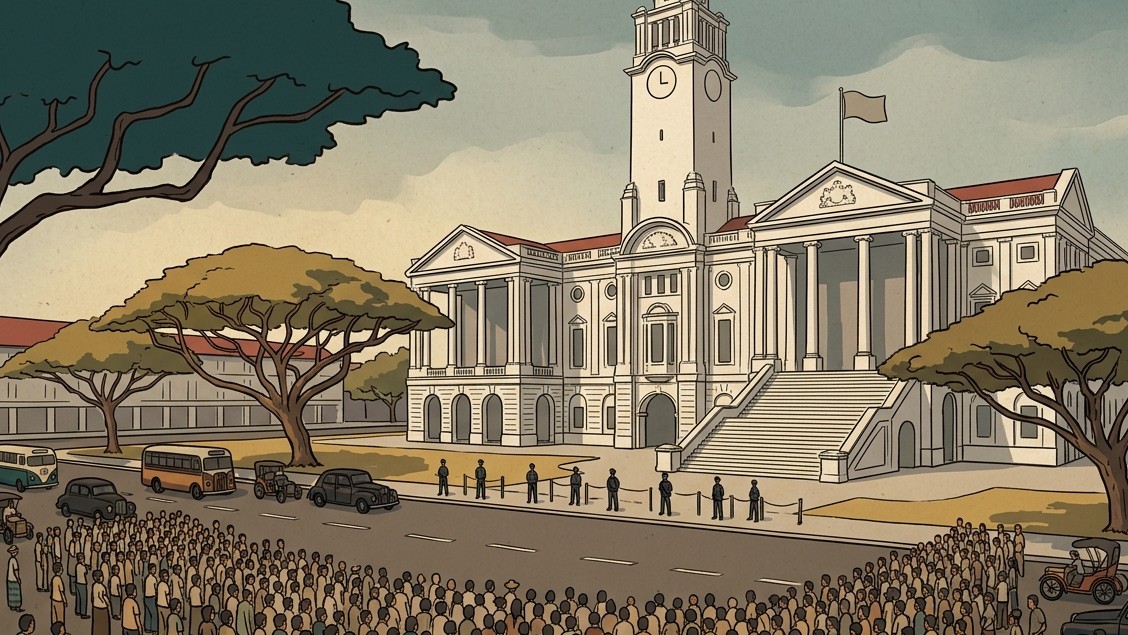
- Outbreak: after the appeal was rejected, angry crowds gathered outside the Supreme Court, and violence spread.
- Order restored: troops were deployed and a imposed, but the riots lasted three days.
- The cost: 18 people were killed and 173 injured.
Significance and Lessons
- Anti-colonial resentment: historians view the riots as an expression of anger at colonial rule, not only at one court case.
- Irresponsible reporting: the riots exposed how sensationalised reporting can inflame tensions.
- Religious sensitivity: they showed how quickly religious feelings could erupt into violence in a multi-religious society.
- Lessons for the future: the riots shaped later leaders' commitment to multiracialism and religious harmony, a lesson Singapore still remembers.
In One Sentence
- Sensationalised reporting turned a custody case into a religious and anti-colonial issue, and the rejected appeal in December 1950 sparked three days of riots that left 18 dead.
Think About It
- How did the newspapers turn a family court case into something much bigger?
- Why might some people have felt the British judge had taken sides, even if he was following the law?
- What lesson do the Maria Hertogh riots teach about living together in a society with many religions?