How Did Free Trade Turn Singapore into a Regional Trading Hub?
How Did Free Trade Turn Singapore into a Regional Trading Hub?
In 1819 the British made Singapore a , and this was the foundation of its growth. These notes explain how free port status drew traders: no taxes on goods, lower costs than the Dutch ports, and a central, easy-to-reach location where goods from East and West met. Trade took two forms, and the , and it grew from $11.6 million in 1824 to $89.7 million in 1873, making Singapore a .
What Was a Free Port?
- No taxes: traders did not have to pay taxes on the goods they carried.
- Free to trade: ships came from many places, and traders could trade freely with one another.
- Lower costs: other ports, such as the Dutch ports, charged , so trading in Singapore was cheaper.
- A central location: Singapore was easy to reach for traders from both East and West.
How Did Free Trade Turn Singapore into a Regional Trading Hub?
Free Port Status
- PPointOne way British rule helped Singapore grow was by making it a free port in 1819, which turned it into a regional trading hub.
- EEvidenceTraders paid no taxes on the goods they carried and could trade freely with one another, while the Dutch ports charged duties. Goods arrived from Britain, India, China, Siam and the Malay Archipelago, and trade grew from $11.6 million in 1824 to $89.7 million in 1873.
- EElaborationBecause trading in Singapore cost less than in ports that charged duties, merchants chose to bring their goods there. The more traders came, the more goods from East and West could be swapped in one central place, which drew still more ships.
- LLinkHence, free port status attracted the traders and goods that made Singapore a regional trading hub, the base on which its later growth was built.
Two Kinds of Trade
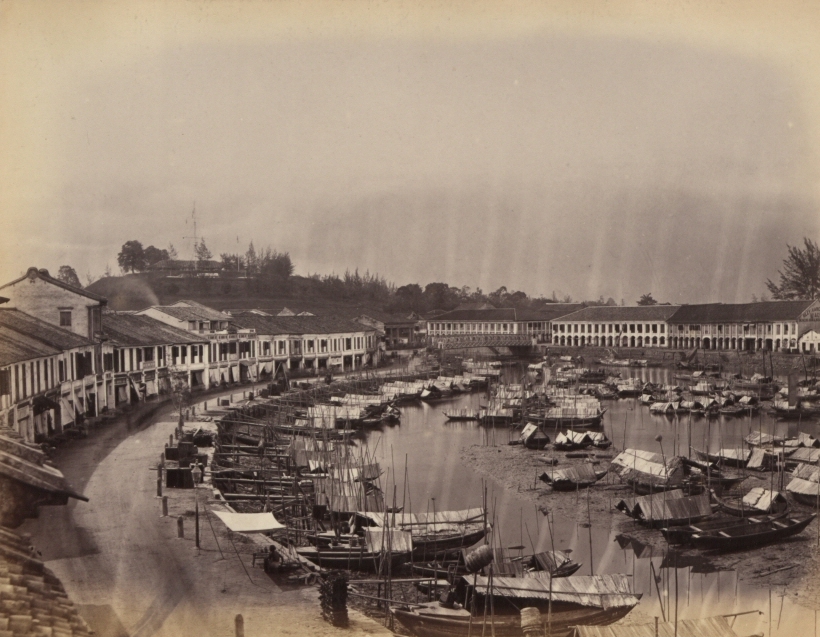
- Transshipment: goods were moved from one ship to another on their way somewhere else, making Singapore a stopping point on the trade routes.
- Entrepôt trade: goods were unloaded into warehouses, repackaged into smaller amounts, then re-exported.
- Impact: in the entrepôt trade, Singapore earned profit by processing and packaging goods, not just from ships passing through.
Goods From East and West
- Britain and Western Europe: manufactured goods, such as glassware and clocks.
- India: cotton and opium.
- China: tea and silk.
- Siam, Annam and Cochin China: rice, sugar and salt.
- Malay Archipelago: coffee, pepper and birds' nests.
- Significance: because goods from so many regions met in one place, Singapore became the natural centre for swapping them.
Reading the Numbers
- Growth: Singapore's trade grew from $11.6 million in 1824 to $89.7 million in 1873.
- Almost tripled: between 1830 and 1867, Singapore's trade almost tripled.
- The result: by 1867, Singapore was one of the most important ports in the British Empire.
- Reading a graph: check the title, the and the gaps between the years before you describe the .
In One Sentence
- Free port status made Singapore cheaper than ports that charged duties, so traders from East and West came to swap goods there, turning it into a regional trading hub whose trade grew many times over by 1873.
Think About It
- Why didn't producers just send their goods straight to the buyers, instead of through Singapore?
- Which kind of trade do you think made more money for Singapore: transshipment or entrepôt trade? Why?
- If the British had taxed trade, what might traders have done instead?