Did the British Educate Early Singapore Well?
Did the British Educate Early Singapore Well?
These notes explain how British education affected Singapore's growth. Before 1867 schools were not a priority. After 1867 a fast-growing port needed , so the British gave grants to schools that taught English, which supplied the workers that trade and government needed. But other schools were left to communities and , so education had only , serving the colonial government more than local people.
Before 1867: Not a Priority
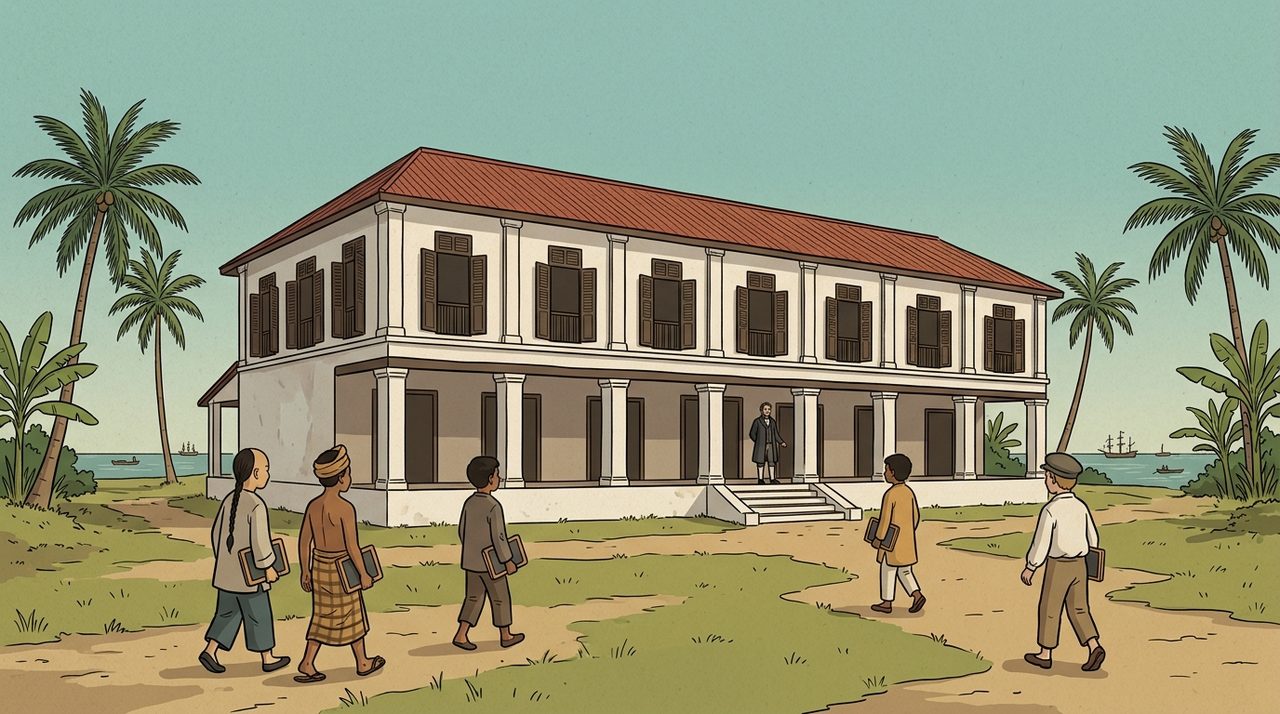
- Why: the government never had enough money, and most people were who planned to make money and go home.
- Few government schools: the British gave free primary schooling in Malay, set up very few Tamil schools, and none for the Chinese.
- Left to others: most schools were started by Christian missionaries and European traders, and ran their own way.
- Few pupils: many parents did not see the value of English education, so few students went.
After 1867: Schools for Clerks

- A growing port: after 1867, Singapore grew fast, and government offices and companies needed English-speaking clerks.
- Grants: the British gave money to schools that taught English to students who did not speak it at home.
- The aim: schools grew to meet the needs of the colonial government.
Did the British Educate Early Singapore Well?
English Education for the Administration's Needs
- PPointBritish education helped Singapore grow by supplying the English-speaking workers that a fast-growing port needed.
- EEvidenceAfter 1867, Singapore grew fast, and government offices and companies needed English-speaking clerks. Schools that taught English to children who did not speak it at home received .
- EElaborationClerks kept the records, letters and accounts on which the government and trading firms depended, so a steady supply of them allowed both to handle more business as trade expanded.
- LLinkHence, English education supported the administration and trade that drove Singapore's growth.
Left to the Communities
- Chinese schools: from 1911, many Chinese schools were run by the Chinese community, and they did not accept government interference.
- Mission schools: schools set up by Christian missionaries were left free to run as they wished.
- Chinese education: before 1867, apart from some Chinese lessons at the , it hardly existed.
The Verdict: Limited Success
- PPointHowever, British education had only limited success, because it served the colonial government more than local people.
- EEvidenceFrom 1867 to 1942 the government did improve schooling, but grants went mainly to English schools; Chinese schools were left to the community and mission schools to the missionaries, and there was a clear lack of good education that met the needs of the local people.
- EElaborationBecause the government funded schooling mainly to produce clerks, it had little reason to provide good education for the many children outside English schools, so most local people gained little from it.
- LLinkTherefore, education contributed to Singapore's growth as a port, but its benefits for the people were limited, a pattern also seen in healthcare.
In One Sentence
- The British mainly funded English schools to train clerks for the colony, so education supported trade and government but had only limited success in meeting the needs of local people.
Think About It
- Why might migrants who planned to go home not care much about schools?
- Who gained most from English schools: the students, the companies or the government? Explain.
- Do you agree that British education had only limited success? What evidence would you use?