Why Did Early Singapore Struggle with Law and Order?
Why Did Early Singapore Struggle with Law and Order?
Early Singapore grew very fast, from barely 150 people in 1819 to about 6,000 by 1821, and more people and more trade brought more crime. These notes explain three reasons why the British struggled to keep : a small, weak police force, powerful , and the abuse of and women. At sea, pirates attacked trading ships in the Straits of Melaka, which kept traders away.
A Fast-Growing Town
- More people: barely 150 people lived in Singapore in 1819; by 1821 there were about 6,000.
- Many languages: a census in 1911 found 57 different languages spoken in Singapore.
- Young men alone: most were young Chinese men who came to work. In 1860 there were 14 Chinese men for every Chinese woman.
- The result: with more migrants and more trade came more robberies, murders and other crimes, which threatened the trade on which Singapore depended.
Why Did Early Singapore Struggle with Law and Order?
Reason 1: A Small, Weak Police Force
- PPointOne reason why the British struggled to keep law and order was that the police force was too small and weak.
- EEvidenceIn 1820, William Farquhar made his son-in-law, Francis James Bernard, the , but Bernard had other duties. The whole force was twelve people: Bernard, a writer, a jailor, a sergeant and just eight policemen, for a few thousand settlers. The force stayed small and weak for years.
- EElaborationA part-time chief and a handful of men could not patrol a town whose population was multiplying, so criminals knew they were unlikely to be caught. The government's shortage of money meant the force could not be enlarged.
- LLinkHence, a weak police force left crime unchecked as Singapore grew.
Reason 2: Secret Societies
- PPointAnother reason why law and order was hard to keep was the power of the secret societies.
- EEvidenceThe societies helped poor migrants with work, lodging, care when sick and burials, but by the 1840s several had thousands of members, and gangs of up to 200 carried out armed robberies. They fought each other over territory, gambling and other illegal trades; the worst , the 1854 Hokkien–Teochew Riots, lasted ten days, with about 500 dead and some 300 homes destroyed. Until the 1870s, no British official, and no policeman, understood the Chinese dialects.
- EElaborationBecause the societies met migrants' needs that the government ignored, members stayed loyal to them, and because no official spoke their dialects, the government could not find out how they worked, let alone stop them.
- LLinkThus, the secret societies grew stronger than the law, and their fights could bring the town to a standstill.
Reason 3: Abuse of Coolies and Women
- PPointA third reason was that poor migrants, especially coolies and young women, were cheated and abused without protection.
- EEvidenceCoolies too poor to pay their fare from China went to a , who paid it; they then worked without pay for a year or more for the employer who paid the agent. Some agents tricked or even kidnapped poor Chinese, and their overcrowded ships, short of food and water, were called "". also tricked young women from China with promises of well-paid jobs, then sold them when they arrived.
- EElaborationWith no money, no family in Singapore and no official who spoke their dialect, victims had nowhere to report abuse, so those who exploited them faced no punishment.
- LLinkTherefore, the most vulnerable people in Singapore had no protection from the law, showing how far the British had failed to keep order.
Danger at Sea: Piracy
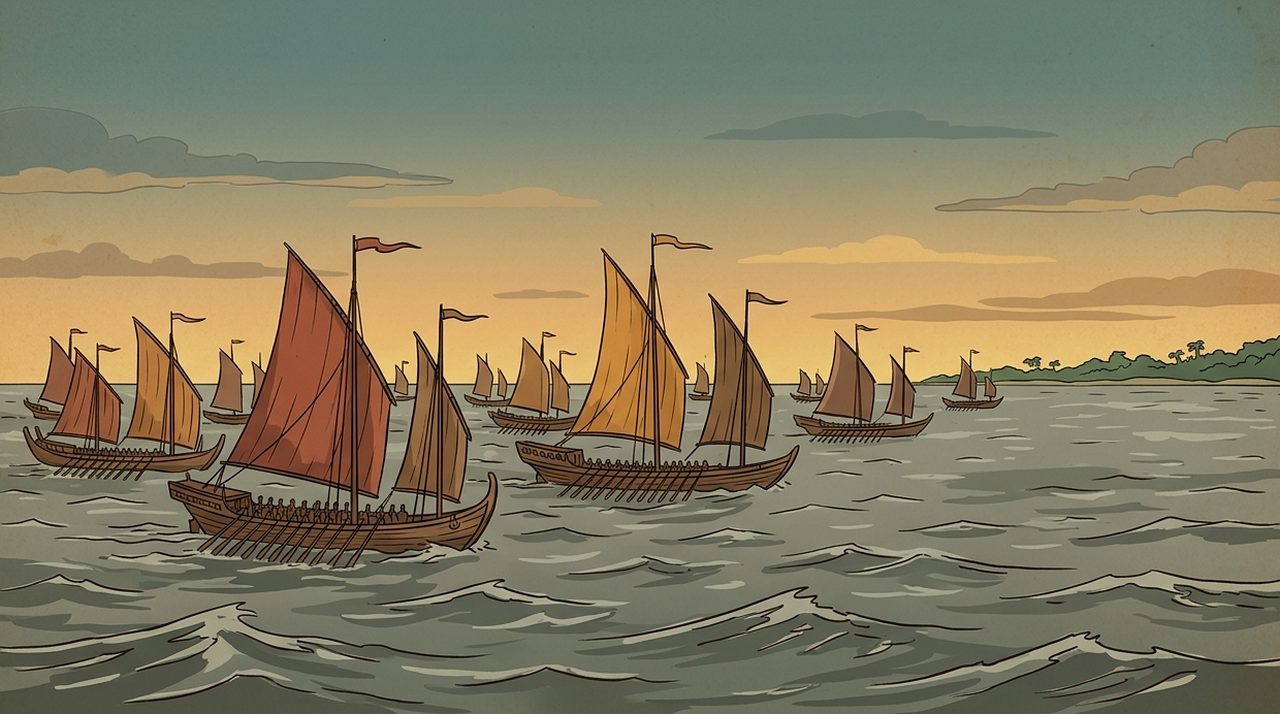
- The pirate wind: every year from August to October, fleets of pirate boats sailed from northern Borneo to the Straits of Melaka.
- All year round: pirates from the coasts of Java, Sumatra and Malaya also attacked trading ships.
- Close to home: pirates could be seen attacking ships just outside Singapore's harbour, so many traders stayed away.
- Impact on trade: cargoes were taken, travellers were killed or sold as slaves, and trade suffered badly.
In One Sentence
- As Singapore grew, a small, weak police force, powerful secret societies and the abuse of coolies and women made law and order hard to keep, while kept traders away, so restoring order became essential for the port's growth.
Think About It
- Secret societies helped migrants find work and a place to stay, but also caused riots. Why did so many migrants still join them?
- Why did it matter so much that no British official could speak the Chinese dialects?
- Which of the three problems do you think was hardest for the British to fix? Why?